Meher Baba
Meher Baba |
CONTENTS KEY
2. Contesting Misrepresentation
3. The Spiritual Abode for One and All
4. Murderous Cult Mentality and Hate Campaign
7. Be in the world but not of the world
9. Meher Baba Centres and Censorship
12. Suppression of Literature and Dr. Ward Parks
14. Complexities: Ann Powell and Delia De Leon
15. Dr. James Newell, Wikipedia, and Dr. Ray Kerkhove
Meher Baba (1894-1969) was an Irani Zoroastrian by birth. He has a clean moral record, unlike a number of recent Indian gurus. His evolutionist teaching is distinctive. During the 1960s, he expressed strong opposition to the use of LSD; he was a very beneficial influence in that respect. More controversially, he claimed to be an avatar or divine incarnation. Over the years I have included his career in my research interest, adopting a procedure of approaching the data without reliance upon the avatar claim and nor related devotional interpretations. I am resistant to hagiology. Further, this exercise has been part of a more wide-ranging approach, including studies of Iranian religion and philosophy. (1)
Christopher Ott at the Myrtle Beach Meher Spiritual Center, 2014. Courtesy Anthony Zois |
Writing about Meher Baba is not the easiest assignment for a non-devotee. Ideological constraints from the American branch of the movement are formidable. Western Meher Baba devotees on Wikipedia were a source of disapproval and harassment, harbouring an agenda in my direction that was for long concealed.
I have never participated on Wikipedia; I was never an editor in that online project. Such activity is not suited to my independent disposition. Wikipedia editors are predominantly pseudonymous, a controversial feature; most Wikipedia editors are not authors. The Meher Baba article has gained a reputation for "closed circuit" editing. A Meher Baba devotee, Christopher Ott, presided over that article for many years. He proved a strident opponent of the Kevin R. D. Shepherd article, appearing in 2009. The latter item was deleted in December 2009 under circumstances that were disputed. Details were closely recorded. I never met or corresponded with Ott, nor did I mention him in any book. He is influential at the Meher Spiritual Center of Myrtle Beach, South Carolina.
Christopher Ott was a major instigator in deleting the Wikipedia article Kevin R. D. Shepherd. He supported the defamation of cyberstalker Gerald Joe Moreno against myself. The hostility from this extremist editorial quarter is on record. Supporting the libellous attack blogs of an agent for the Sathya Sai Baba sect is no proof of accuracy. The defamation from a sectarian agent has been repudiated. Moreno was a former Wikipedia editor, zealously active at the Sathya Sai Baba article. The fact that Ott chose to support Moreno, against my objections to libel and sexual abuse, is no proof that the deleted author was irrelevant (section 15 below).
The injustice associated with the Meher Spiritual Center is not confirmation of any divine prerogative for insular devotees. I have no connection with the Meher Baba movement. I am not a devotee. See Statement of Independence.
The factor of "cultist" activity and manipulation on Wikipedia has long been lamented. There are strong critics of this trend, which has masqueraded behind a declared NPOV (Neutral Point of View). Moreno was in league with Jossi Fresco, also notorious for sectarian affiliation. Both of these Wikipedia personnel were banned for transgressing editorial rules. Undeterred, Ott subsequently supported Moreno attack blogs on the Kevin R. D. Shepherd deletion page. Critics said that this action fell foul of Wikipedia rules, even amounting to criminal strategy.
The Wikipedia Meher Baba talkpage has prominently featured two pseudonymous Meher Baba devotees, namely Dazedbythebell (Christopher Ott) and Hoverfish (whose real name is Stelios Karavias). Ott contributed on Wikipedia a derisive appellation in my direction (see triple incarnation theory). I became "Sam Shepherd," acknowledgement of my real name being too great an effort. My identity was also haphazardly confused with that of two real name Wikipedia editors by the same belligerence (in reality, I have never been a Wikipedia editor). The bad manners and superficial assumptions of the Ott circle earned a description in terms of troll characteristics (Postscript 1).
A relatively minor symptom of opposition occurred in 2009. The English Wikipedia article on Meher Baba eliminated reference to an annotated work on the subject, in preference for canonical and other books (one of which has only twelve lines on Meher Baba). I am referring to my own book Meher Baba, an Iranian Liberal (1988), 300 pages in length, featuring a bibliography of fifty pages. The exclusion is strongly associated with Ott.
The Meher Baba article on Wikipedia is noted for cordon procedure (section 15 below). In my own case, the deletion of reference to a relevant annotated book suggested to observers a well known tendency of religious groupings to suppress works not adhering to partisan criteria, imposed by a consensus within the movement or sect. Analysts have observed that Iranian Liberal provided the first critical bibliography on the Meher Baba literature, a matter disdained by dogmatic Western devotees. However, some American followers of Meher Baba do not repudiate the relevance of Iranian Liberal (Postscript 2). Their contrasting objectivity is commendable.
A twelve line commemoration, from the book Children of the New Age (2003), became the cited Wikipedia source for Meher Baba's birth in a Zoroastrian family (Meher Baba, accessed 10/04/2020). The same peripheral commentary dovetails Meher Baba with a well known entity promoted by Ouspensky (the Russian philosopher). "Gurdjieff and Meher Baba are particularly strong representatives of the biographical hybridity swirling beneath the surface of these new spiritualities" (Sutcliffe 2003:38). The pronounced differences between these two figures are completely ignored. The inaccurate statement follows that Meher Baba "claimed initiation" from a female Sufi (no name supplied, but meaning Hazrat Babajan). He never claimed initiation, being opposed to initiatory practices.
A far longer version of biographical hybridity (entailing a Zoroastrian background, plus Sufi and Hindu influences) was excised from Wikipedia. Meher Baba, an Iranian Liberal was (and is) the only full length 300 page book explicitly describing the Irani (and hence Iranian) subject by means of an ethnic title (as distinct from a new age gloss or a devotee honorific). Irani Zoroastrians in India are noted for retaining elements of Iranian ethnicity and language.
The devotee-preferred twelve line memorandum extends from reference to a 1930s book entitled God is My Adventure, by Rom Landau. A contrasting analysis of the Landau report on Meher Baba was suppressed by devotee editors at the Meher Baba article. Iranian Liberal included an unprecedented critique (in thirty-seven pages) of the reports authored by Landau and Paul Brunton (primarily the latter). This critique, having no relation to the New Age, was rejected by Ott and Karavias. For many years, the sanitised Meher Baba article on Wikipedia did not refer to the dismissal of Meher Baba by Brunton and Landau (accessed 10/04/2020). Meher Baba is not the most historical prospect in such channels.
The Christopher Ott website (Ott's Essays) revealed the close linkage between Ott, Karavias, and Frank Landsman, whose images were displayed, together with brief reference to Wikipedia. After a complaint about collusion of this circle on Wikipedia, that website was removed from open view by Ott, who carefully screened the discernible collaboration by an obstructing sign-in procedure at Google Sites. A formerly accessible URL was http://sites.google.com/site/ottsessays/credits. Transparency is not everywhere in favour.
A close colleague of the American devotee Christopher Ott is Frank Landsman, a Dutch musician with the stage name of Frankie Paradiso. More than one web source has stated that Ott and Landsman co-wrote the Dutch Wikipedia article on Meher Baba. This detail is well known.
Another member of the Ott circle was a fixture at the English Meher Baba article. The Wikipedia editor Hoverfish (Stelios Karavias) was notably aggressive in my direction, even inserting into a Wikipedia "noticeboard" discussion a disapproving theme clearly originating from within the Meher Baba movement, or rather, the American branch of that contingent. A sectarian agenda here emerged, contravening Neutral Point of View. Hoverfish made the following statement, revealing the underlying reason for the Ott circle belligerence:
I hear that Shepherd and his mother had correspondence with Meher Baba in the 1960s, and later with some of his prominent disciples, that they became involved with another spiritual teacher, against Baba's orders, that this caused them to become ostracised by the English Baba group and that in the 1980s they sent letters to all Baba centers around the world defending themselves. I also hear that Shepherd has a dislike of followers of Meher Baba and considers them 'sectarian,' although no sect actually exists. (Hoverfish, Wikipedia Reliable Sources Noticeboard, 29 January 2012)
Acute contractions and blatant inaccuracies are evident in this version of events. Devotee gossip is not a reliable guide to the sequence of actual occurrences. Neutral Point of View on Wikipedia can amount to a farce. The distorted and hostile report of myself and my mother is very misleading, being in need of correction from a direct participant in caricatured episodes. Wikipedia needs more history, as distinct from cult lore.
The gossip was evidently a substantial factor in precipitating deletion of the Kevin R. D. Shepherd article. This factor explains the constant hostility from Meher Baba devotee editors on Wikipedia. The underlying polemical bias against "Sam Shepherd" is considered a serious count against due objectivity by assessors outside devotee ranks.
2. Contesting Misrepresentation
Only one component of the deceptive devotee statement, dating to 2012 (section 1 above), can be considered correct. Meaning that myself and my mother (Jean Shepherd, alias Kate Thomas) had correspondence with Meher Baba in the 1960s. We did not in fact become involved with "another spiritual teacher." The misrepresented entity was here an Indian disciple of Meher Baba who never made any claims, and who never became a spiritual teacher, instead living a very retiring existence as a scientist and electronics engineer. He always insisted that he was an ordinary man. His integrity cannot be faulted.
Adi S. Irani, London 1966; Jean Shepherd, 1972. Both images copyright Kevin R. D. Shepherd. |
The misrepresented Hindu disciple had the misfortune to be considered a rival by an influential authority figure, namely Adi S. Irani (d.1988), the brother of Meher Baba who was resident in London. Adi likewise was not a spiritual teacher, but did demand the allegiance of my mother, to whom he was partial; she was unable to credit that his rival was so irrelevant by comparison. She supported the rival, who had earlier left England, returning to India in relative obscurity. Adi refused to acknowledge the validity of an unpublished book she had written, which expressed esteem for the rival, although within the context of her allegiance to Meher Baba.
I was caught in the middle of this drama, being only sixteen at the time. I was a follower of Meher Baba, although sometimes reacting to the failings and dogmatism of devotees. I had met both Adi and the rival, and observed many differences between them. I had encountered the rival during a short period in July 1965, when he had briefly returned to England. I never saw him again (and nor did my mother). It became obvious to me that Adi was jealous of Inder Sain (the rival), not least because he (Adi) was much attracted to my mother, even visiting her shop in Cambridge. Adi was very annoyed when he grasped that she esteemed Inder more than him.
My mother tended to believe that Inder would eventually become a "master." When she encountered the dogmatism of Adi, she would not retract this belief, there being no proof that Adi was superior. Adi reacted with a threat, telling my mother that unless she recanted and destroyed some of her writings, he would personally ensure that she was blocked from the movement. She was unable to oblige, feeling nauseated by his calculating tactic.
Adi subsequently engineered an agenda of excommunication, spreading defamation of his victim amongst the mandali (resident devotees) at Meher Baba's ashram (Meherazad). The major recipient was his sister Mani, who believed every word he said. Adi also callously outlawed me for supporting my mother against him (although I held a modified view about Inder). I perceived with shock that this was a campaign of self-affirmation on Adi's part. He was widely considered by devotees to be Meher Baba's impeccable "ambassador" in England. Adi was certainly proud of that role.
In October 1966, there commenced a complex correspondence with Meher Baba and the ashram, lasting for months. Baba was in seclusion, and generally averse to correspondence, which he discouraged, unless in emergency. My mother had an unusual history of communication with Meher Baba. I had also received some communications from him in the past. His brief cablegram communications were quite different to the accusing letters sent at this time by his sister Mani (d.1996), who was clearly in support of her brother Adi in London. My correspondence was with Mani, not with Adi, who remained conveniently, though influentially, in the background.
At first I expressed the belief that Inder could not be an ordinary man, because he stood out so much from the devotees, whom he did not in any way resemble. I dared not refer to the current situation with Adi, fearing that the latter might become even worse in his reactions if I did. The real issue was Adi versus Inder. This factor was impossible to explicate under the circumstances. Mani had never met Inder. To agree that Inder was ordinary would mean endorsing the argument of Adi, the presumably superior "ambassador" who basked in the limelight of high status and supposedly infallible utterance (a feat generally attributed to the mandali by devotees).
Meher Baba sent a prolonged string of cablegrams, the final one acknowledging with approval that we (myself and my mother) had conceded his theme that Inder was an ordinary man (which was also Inder's own consistent refrain).
That final cablegram from Meher Baba (dated February 1967) was totally ignored by Mani, whose prior version of the situation was transmitted to devotees at large (most of the surviving mandali were in low profile, and did not communicate with Western devotees). Adi prudently retreated, and made no further accusations. He neglected to inform the mandali of his own biases which had been so influential in the episode under discussion. Several years later, after the death of Meher Baba, Adi privately acknowledged (in London) the errors which had been made. However, he was unwilling to make this a public disclosure, and never in fact did so.
Adi admitted that Mani and himself had handled the situation, not Meher Baba; they wished to impose the "ban," which they did. However, the final cablegram from Meher Baba conflicted with their tactic. The crucial communication from Meher Baba posed a contradiction for anyone aware of it. Adi was often closely associated with the mandali, having long ago been one of them. By that time, the mandali were believed by devotees to be infallible. The supposed perfection here avoided the final cablegram, which was effectively suppressed. The "ban" by Mani and Adi was preferred to Meher Baba's own final verdict.
As a consequence of this episode, I stopped being a devotee. I no longer identified with the movement, and detested Adi for his act of incrimination. The situation was atrocious. I was banned by association with my mother, who had not done anything wrong. Adi and his associates denied me all newsletters relating to Meher Baba. However, sympathetic devotees compensated for this excess behind the scenes. Adi never bothered to ascertain my views at any juncture of this episode. His power-crazed role as the "ambassador" was unrestrained in this instance. His position was one of absolute authority. Nobody dared to contradict him. My mother was the first dissident.
Devotees generally assumed that Meher Baba was responsible for the "ban," probably because Mani was so keen to assist Adi in her more visible international capacity. Adi later specified that Meher Baba was not responsible for the "ban," but instead Mani and himself. These two were delegated by Meher Baba to deal with any matters relating to myself and my mother. Adi claimed to know all about the subject of Inder, and Mani sent the letters that resulted. Most onlookers did not know that Adi was the pivotal factor of agitation. Meher Baba appeared to agree with Mani and Adi, but subsequently contradicted the "ban" by his final cablegram, which disconcerted Adi (who was sent copies of all the cables by Baba's secretary Adi K. Irani, known as Adi Senior, to distinguish him from Baba's brother, who was his junior).
The nature of Meher Baba's final cablegram negated any excuse for the "ban" being perpetuated, as Adi Junior knew very well. This factor caused Adi to retreat from the issue. Meher Baba had clearly not censored the victims. His final cable read: "Your cable of acceptance that Inder is ordinary man has made me happy. I send my love [and] blessing to you both. Meher Baba" (26 February 1967).
To sum up, my mother was an oppressed mystic, Adi (Junior) was a cult-like dictator, and I was a juvenile victim in my pre-rational phase. When I began to change my orientation in 1967, I still regarded Meher Baba with respect, while being able to perceive more clearly the limitations of a devotee mentality. See Statement of Independence. The accepted authority figures like Adi and Mani were not infallible, as many believed. Instead, they made errors that could be very serious. One or two psychologists who subsequently studied the details (in my mother's autobiography), (2) have thought that certain events can be construed as a criminal offence against a minor, i.e., myself, who was only sixteen at the time. I was stigmatised and outlawed, according to a predetermined campaign mounted by a zealous authority figure, who was suffering pique at being considered secondary to a scientist who displayed more sophistication in "Baba's cause."
Inder, 1965, a disciple of Meher Baba since the 1940s, and mistakenly reported as a guru in devotee lore. He lived a conventional life as a professional scientist. Copyright Kevin R. D. Shepherd. |
Over the years, I heard about the distorted version of myself and my mother that was in devotee circulation, though more especially in America. The devotees had no idea of what had really happened. Inder was sometimes mistakenly represented as a guru. In fact he was a scientist, working with such leading enterprises as Pye Telecommunications. He was also very unobtrusive and difficult to trace. The mandali eventually admitted that they no longer knew where he lived. This failure to locate Inder occurred during the 1970s.
The developing notion that "they became involved with another spiritual teacher, against Baba's orders" is sheer nonsense. We never saw Inder again after 1965, and there was no correspondence with him. Many devotees are unable to assimilate recorded facts. They are instead influenced by hearsay and beliefs promoted by sectarian authority figures.
"This caused them to become ostracised by the English Baba group." That report is erroneous, the nature of events being misconceived. In fact, during the early 1970s, I was in contact with three prominent devotees of that group, namely Adi S. Irani, Delia De Leon, and Fred Marks. I was on good terms with them, and in all cases, was invited to their homes, although I was no longer a devotee. I remained wary of Adi. However, he was not now hostile; he very reluctantly (and all too briefly) admitted his error. The confession occurred in private meetings. Adi had a habit of smoothing over events, pretending that everything was now in perfect order, despite the grapevine distortions he had created.
Fred Marks, London 1966. Copyright Kevin R. D. Shepherd. |
Of these three devotees, I was closest to Fred Marks (1900-1985), a former acquaintance whom I visited several times in London during the years 1973-75 (Meher Baba, an Iranian Liberal, pp. 295-6). He did not fully understand my independence from the movement, although he accepted this, being well aware that Adi comprised a problem factor. Fred knew more about Adi than did any of the other English devotees, having assisted him at close range with his antiques business over many years. (3) Fred's underlying frustration with some of Adi's habits did sometimes emerge in private conversation; however, in public he had never been able to overcome his awe of Adi's authority role. (4) Fred was a retired schoolteacher, amongst other vocations. He had some skill as a dealer in English antique furniture; however, he was not commercially motivated, and never acquired much capital. He told me that he assisted Adi because he felt that he ought to do so, not because he was keen to acquire money.
By the 1970s, Adi's effective rival was the rock superstar Pete Townshend, who had become a prominent devotee, gaining hero worship from young American and British devotees. Adi could not compete with this new development, becoming estranged from the London Meher Baba group (now known as the Meher Baba Association).
Ironically enough, Adi was the supporter of my mother in her failed petition to Townshend in 1977. The rock celebrity was so overbearing that he would not heed her version of events. Instead, he dogmatically maintained that she should be banned from his new London Centre (called Meher Baba Oceanic). Townshend was influenced by the distortions and misconceptions blindly perpetuated by Adi K. Irani (Adi Snr) in India. Townshend ignored the objections of Adi S. Irani (Adi Jnr) in London. The "ambassador" in London was now an ailing man in relative obscurity. Adi Jnr was the ultimate cause of much erroneous reporting, having neglected his responsibilities in reparation for too many years.
Pete Townshend |
Meher Baba Oceanic transpired to be an impaired project that collapsed. A few years after Oceanic was founded in 1976, Townshend became notoriously addicted to cocaine and heroin. This drawback was accompanied by acute alcoholism. These habits led to a dangerously close encounter with a hospital life support system. Townshend subsequently recovered, but lost his prestige role in the Meher Baba movement as a consequence of his problems.
In contrast, my mother was a teetotaller and never took drugs. She became noted for her stance against drug ingestion, strongly opposing the psychedelic therapy (and allied holotropic breathwork) of Stanislav Grof. She witnessed casualties in "new age" sectors, where alternative therapy was a commercial predator. See Findhorn Foundation and Against Grof Therapy.
My mother died in January 2017, forty years after the Townshend episode. She was still a complete outsider to the movement, while retaining her high opinion of Meher Baba (Postscript 3). In contrast, her view of the movement was less than flattering. Making no judgment of Eastern devotees, she concluded that the surviving Western contingent were too often intolerant, dogmatic, backward in analysis of documents, and dominated by a sense of their own prowess. She stated (in private) that she did not wish to be associated with the British and (white) American devotees, at whose hands she had suffered.
3. The Spiritual Abode for One and All
A devotee book, published at Myrtle Beach, amounts to an elevation of the Meher Spiritual Center in that location. To quote from the publisher promotion:
This treatise reflects on the future of Myrtle Beach as the place of world pilgrimage that Meher Baba predicted. It considers (1) Meher Spiritual Center as his home, pervaded by His Love and presence, and characterised as a place of universality and freedom, and (2) how Baba’s vision for Myrtle Beach as a “spiritual abode for one and all” might evolve cooperatively. (Promotion for J. Burroughs, The Spiritual Abode for One and All, Sheriar Books, 2019)
In 1988, a major figure at the Meher Spiritual Center, namely Ann Conlon (d.2005), stated in a dismissive letter to myself that nobody there was interested in Meher Baba, an Iranian Liberal (quote: "there is no real interest"). She knew that this new book of mine contained the first exposure of deceptions achieved by Paul Brunton (the most well known critic of Meher Baba). A goodwill copy of the book had been sent to Conlon, to make quite sure she knew of the contents. The reaction has been considered xenophobic.
A staunch supporter of Conlon afterwards wrote to the author of Iranian Liberal. This Meher Spiritual Center devotee confirmed that I was regarded in terms of a complete prohibition of contact. Reading a non-canonical book was out of the question for Center devotees. She would obviously never read a single page of the heretical work. I was banned for life, a factor which she did not profess to understand. No reason was supplied for the drastic attitude. She merely took the Conlon prohibition on trust, in an environment where devotee decrees were never questioned. Theirs not to reason why, only to comply with dictates. Though she expressed a degree of concern at the insular situation, the Conlon supporter was nevertheless determined to end her short letter with a long blank space, indicating the uncrossable void imposed between myself and the Meher Spiritual Center. This quasi-medieval zone of proscribing zeal is now presented as a divine model for universal freedom and world pilgrimage.
An independent revisionist theme reads: The Spiritual Abode for One and All – but not for those untouchables stigmatised by the Avataric Elite.
My mother never contacted Meher Spiritual Center. As an English untouchable, she knew what that American organisation dictated in terms of elite ideology and separatism. However, she did contact the less well known Meher Baba Association (MBA) in London. This development followed in the wake of her negative encounter with the cordoning Pete Townshend (section 2 above). She had been seriously misrepresented and ruthlessly marginalised. She could get nowhere with letters to the hierarchy, so she telephoned a presiding MBA officiant. Tanya Moller was very aloof, treating her as an outcast. The petitioner was denied all relevance in this interchange. I was told of the conversation soon afterwards by the victim. My mother also telephoned another officiant, who emphasised that the failed idol Pete Townshend was no longer connected to the MBA. Ironically, the formerly lionised Townshend was now in the same censured category as my mother.
Pete Townshend has since honestly admitted his long-past error in trying to impose his personal programme on a London “Baba Centre” he created. Such programmes can easily be formatted as unassailable truth by diverse partisans seeking donations.
My mother concluded that the much advertised key theme “Avatar of the Age” was singularly convenient for the Prestige Elite, who presumed they could do no wrong under such immaculate auspices. As followers of the Avatar, they had to be right. They could never be in error. The inflation could be prodigious in some instances. This was one of the reasons why Jean Shepherd said (in private) that she no longer wished to be associated with Meher Baba devotees. She regarded the Western variety as irrational and extremely inconsiderate. Some persons were censorious ogres, while many of them were slavish adherents of devotional jargon that repelled outsiders. She died in 2017, without the slightest reparation being made by the “holier than thou” partisans of Avatar Meher Baba.
Jean Shepherd referred to callous suppression by a complacent elite of hypocritical devotees, who constantly repeated the "love and compassion" theme for desired public image. Their programme was comparable, in the absence of conscience, to discriminatory practices of the medieval Catholic Church Inquisition. The Meher Baba movement lacked democracy, a word not comprehended by the MBA or Meher Spiritual Center. The elevated role of elite devotees, as messianic disciples, served to magnify their egoistic career as entities beyond criticism. My mother complained of their psychological cruelty, indifference to complaint, and total lack of scruple.
Jean Shepherd had duly relayed the content of Meher Baba's last cablegram to her in February 1967 (section 2 above). That message was totally ignored by English devotees (including Pete Townshend). What Meher Baba said was irrelevant to them. Only what the devotees said was applicable. In this dogmatic spirit, one woman responded to a relevant postal communication with the statement: "I do not want anything like this coming through my door." The complainant was primarily a devotee of Mani, interpreting the 1967 cablegram to mean that Mani was being contradicted. Therefore the celebrity message from Meher Baba should be avoided.
My mother telephoned an English provincial "Centre leader." The leaders of Meher Baba Centres were exalted beings. The enquirer was treated to a volley of angry words, to the effect that any criticism of devotee leaders, however moderate, was totally unacceptable. Any further communication was prohibited by stern decree, full stop, over and out. The inverse PR was disgraceful. My mother ceased to contact any devotees, regarding them as impossible respondents, which indeed they were in her direction. For the many remaining years of her life, she was totally independent of the Meher Baba movement, never once contacting that oppressive body.
In 1988, I relayed the same cabled message of Meher Baba to Ann Conlon at Myrtle Beach. The devotee leader totally ignored this 1967 message, choosing to construe that any contradiction was proof of my error, confirming the need for a permanent ban on recipients of Meher Baba's benevolent cablegram. To contact such elite persons as herself, with relevant data, was futile. This was a bizarre scenario in which no Western devotee took any notice of a relevant statement made by their purported inspirer. Meher Baba was outmoded, unwanted, and effectively heretical, eclipsed by the deafening chorus of devotee opinions and excuses.
Some aspects of the Conlon mentality might be described as follows:
How dare the untouchables protest against their fate of perpetual oblivion until death? Only the grave for them [Shepherd and his mother]. Their fate is the equivalent of eternal damnation, the most they can ever expect. Whereas I am one of the blessed, awaiting heaven. Everyone knows that I represent Meher Baba's Infinite Love and could never be unfair in the slightest degree.
Mani S. Irani, Eruch B. Jessawala |
Eruch Jessawala (1916-2001) proved to be reasonable. One of the more literate mandali, this Parsi was far more rational than many devotees. In 1988, I sent to him the same communication despatched to Ann Conlon. Eruch recognised that the February 1967 cable was very relevant and could not be ignored. He dismissed the manic talk of a "ban," knowing very well that devotees (including himself) did make mistakes. Eruch did not regard Conlon as an infallible authority, nor Adi S. Irani. Eruch was often finding that insistences of Western devotees were eccentric; his strong friction with Sufism Reoriented became well known at this period. Eruch also knew that his ashram colleague Mani S. Irani (1918-1996) was not exempt from error. Meher Baba's sister Mani was one of the most prominent ashram communicators after the death of her brother. Some devotees preferred Eruch, others preferred Mani. Both of these persons exercised a good command of English, making them the focus of liaison with Westerners.
The precise attitude of Meher Baba to diverse events is not always easy to ascertain. In reality, the mandali were not above criticism. He is known to have chided both Mani and Eruch for lapses in attention. A significant record informs: "Something happened another day when no visitors were present in the [mandali] hall. Baba was furious. He was lambasting Mani and Eruch, and they too were arguing" (Kalchuri Fenster 2009:189). On the same fraught occasion, Meher Baba gravely suggested that Mani and Eruch would be the cause of his death via their tendency to argue with him (ibid:190). The firsthand description by Sheela Kalchuri continues:
The atmosphere was so tense and Baba was so serious and upset. I was about to cry. Baba's face dripped with perspiration; his eyes looked fiery and red. His face too was crimson. Even though Baba didn't speak [he was perpetually silent], the colour on his face was an indication of how much energy he was spending in rebuking them [Mani and Eruch]. (Kalchuri Fenster 2009:190)
This 1960s episode at Poona (Pune), together with related events, did not emerge in the published record until forty years after the death of Meher Baba. While he was still alive, any such reporting would have been regarded as diabolical heresy by many Western devotees, who tended to idealise the mandali as infallible disciples. Even today, realistic accounts are not popular with devotees.
In the late 1980s, Eruch's sober assessment of Meher Baba's obscured cable of 1967 was widely ignored. The Meher Spiritual Center did not recognise his marginalised judgment. Meher Baba was discounted; he merely sent an irksome message contradicting elitist cordon procedure. Ann Conlon's reliance upon 1960s Mani (and Adi S. Irani) was victorious, setting the tone for American hitmen in my direction. In the long term, internet terrorist Gerald Joe Moreno was ennobled in the recourse of a Myrtle Beach representative to subvert the Kevin R. D. Shepherd article on Wikipedia. The message amounts to: depress and cudgel heretics from the divine cause maintained by infallible devotees. Abase the foe with godly zeal, make the righteous cause triumphant. Smash the ungodly tabernacles with holy wiki wrath. Holy Joe was a demon of defamation who astonished veteran lawyers (section 4 below).
Meanwhile, my mother had diverse experiences of devotees, including the instance when Adi S. Irani shouted angrily at her while she was a nominal guest in his home; however, the same miscreant supported her at a later date, having grasped that he had been very wrong in his former attitude. The most disconcerting of these experiences involved an English devotee who had met Meher Baba in the 1950s. Living in a distant city, K. once visited my mother’s shop in Cambridge, where he threatened to pull out the telephone wires if she did not give him her full attention. He was much bigger than her, a tall man with long arms and strong hands. On this dramatic occasion in the late 1960s, K. disclosed that he was the Avatar. The rival Meher Baba should now be ignored. My mother was here enjoined to follow the directions of omniscient devotee K.
A volcanic superiority complex had erupted. The elevated visitor was furious at the tangible resistance to his mandate. K. at first refused to leave the shop, staying for nearly two hours in a very surly mood, ranting vengefully at the lack of deference. His unpleasant anger was a cause for much concern. In this ordeal, my mother had to communicate resourcefully with one of the most difficult men she had ever encountered, and perhaps the most bizarre. Afterwards, she had no option but to terminate this unwanted contact. She was enormously relieved that she never saw K. again. He was a strong man who might have required several policemen to restrain him while in a ranting mood.
The menacing K. had formerly expressed his pet theory that Meher Baba’s “work” consisted of improving mass populations in batches of 2,000 people at a time. This fantasy now changed, K. himself being the cosmic achiever. Paul Brunton (alias Jupiter Rex) contracted similar delusions of karmic transformation, his special assignment declaredly involving “the fate of millions.” This detail was reported in a book prohibited at Meher Spiritual Center (Shepherd 1988:176). Undue focus upon exotic themes can evidently disrupt sober thinking.
Beryl Williams, New York, 1966 |
Not all Meher Baba devotees in America were happy with the 1950s and 1960s Avataric scene at Myrtle Beach. Black New Yorker Beryl Williams (d.1968) complained of a racist tendency in white devotee majority ranks. This was a thoroughly heretical reflection which Beryl duly confined to her most intimate letters. The slave-owning mentality of the Southern states was slow to die, despite politically correct optimism (ethnic tensions were abundantly confirmed during the Trump administration, when the Black Lives Matter movement gained strength). Misgivings about racism were squashed by white devotees who pretended that "love and compassion" were everywhere evident. Meher Baba's politically vaunted love could be very elusive on occasion. Ann Conlon, of Myrtle Beach, apparently reacted to my reference concerning racist bias:
She (Beryl Williams) was very reticent about her ethnic identity, and it was some time before she sent me a photograph which proved her colour. She was delighted with my reactions, and indicated that she had been so reticent on this point because she had formerly been rebuffed by white devotees, though she was reluctant to state any identities. (Shepherd 1988:291 lines 2-6)
The same book Iranian Liberal was stated by white American followers, associated with Meher Spiritual Center, to be against Meher Baba devotees. The lies spread by this "democratic American" sector are substantial. According to the Wikipedia misinformation (section 1 above), I have a dislike of followers of Meher Baba. This hostile contention emanates from Meher Spiritual Center. The misconception was derived from contemptuous hearsay and faulty readings of Iranian Liberal, sent to Conlon as a goodwill gesture at the time of publication. Compare some of my actual statements, for example: "If more people were like her [Beryl Williams], the world would be a much better place" (Shepherd 1988:291 lines 7-8). (5)
4. Murderous Cult Mentality and Hate Campaign
The Meher Spiritual Center (MSC) maintained for many years a distorted anti-Shepherd lore eventually rooting on Wikipedia, where my author profile was attacked by pseudonymous editors closely linked with the influential Center. In 2009, one of the hostile editors (Christopher Ott) resorted to Gerald Joe Moreno blogs glorifying Sathya Sai Baba of Puttaparthi. Those blogs, very defamatory in my direction, were strategically linked by Ott on a Wikipedia deletionist page reserved for phase-out of the Kevin R. D. Shepherd article. This gesture was supposedly proof of my wrongdoing and hopeless authorship. The tactic was so pointed that brief descriptions could easily fail to convey the thrust of defamation.
The negative strategy was attended by insidious devotee denials of any sectarian action. Meher Baba lovers, relating to Myrtle Beach, are merely harmless agents of love and goodwill, indeed beyond all criticism as angelic wellwishers. The heavenly host are disarming in their programme of hostility. Meher Spiritual Center (MSC) is a very contradictory factor where lofty ideals are concerned. The pro-Moreno tactic was not "love and compassion," but instead online hate campaign.
The MSC factor contrived a strong degree of defamation via resort to Moreno sectarian libel. Moreno had derided me for emphasising Sathya Sai abuses, and for resisting Moreno attack strategy. Therefore Moreno must be right, decided MSC angel Christopher Ott. In this aberrant form of hate campaign logic, the Wikipedia article on myself, a hideous heretic, had to be deleted by the Ott-related canonical reflex of censure. That is what “universality and freedom” means in the rhetoric of Meher Spiritual Center (MSC).
The angelic Ott exercise was evidently intended as a form of punishment, inseparably associated with the Myrtle Beach cult, furtively employing a public media for sectarian purposes. For many years, Myrtle Beach hate subscribers have regarded me as being suited to a lifelong obscurity and oblivion sanctioned by the insular Ann Conlon (section 3 above). Effectively combining with followers of other guru cults (Adi Da Samraj, Rajneesh, and Sathya Sai Baba), plus the drugs lobby, MSC venom engineered deletion of the Kevin R. D. Shepherd article. That Wikipedia event was a source of great satisfaction to the jubilant Moreno, assisted by a deletionist plan of the similarly triumphant Ott. The angels were singing joyously. Nothing sectarian about them, of course.
Combat Zone: Ex-Yogi Basava Premanand versus Gerald Joe Moreno |
In contrast to Moreno and the Ott spearhead of MSC, I feel much sympathy with the Indian Rationalists who struggled for many years to convey the truth about the miracle-working Avatar of Puttaparthi. Basava Premanand (1930-2009) was one of the most significant Indians of the twentieth century, though still largely unknown in the West. For many years, this versatile ex-Yogi opposed guru cults and misleading so-called "miracles." He was especially averse to a famous guru who enjoyed enormous political influence and accompanying financial dividends. Sathya Sai Baba (d.2011) effectively controlled law courts, which subverted complaints made against him. In the face of overwhelming odds, Premanand published many details of discrepant behaviour at Puttaparthi, eventually gaining strong intellectual support (as distinct from political and legalist compliance with suspect guru strategy). The leading Indian Rationalist became a primary target of Pro-Sai Moreno.
Premanand, a veteran cult investigator, knew how to counter the belligerent American cyberstalker Gerald Joe Moreno. The barbed blogger of New Mexico was reputedly paid by a wealthy American member of the Sathya Sai Organisation to counter all criticism of the Puttaparthi guru. In defiance of Indian Rationalism, the Meher Spiritual Center chose to support the libellous opponent of Premanand and other critics. Serial sexual abuse, economic corruption, and terrorist violence are no proof of due conduct or Avataric perfection. Moreno elaborately denied the relevant testimonies, while Ott elevated cyberstalker libels, thus obscuring the sordid panorama uncovered by diverse researchers. Grave errors can occur in cult sectors eager to censor critics and "heretics."
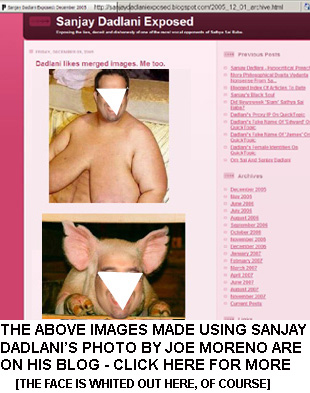
Moreno, dubbed Holy Joe by opponents, launched a deadly apologist mission against critics. This was the online rough stuff, no mercy and no quarter. Forget the more peripheral bloggers with vitriolic accents. Pro-Sai ploys, to beguile the unwary, were strategically employed. Joe assaulted scores of victims and critics in his berating style, laced with quotes from victims to make outsiders think he was being perfectly fair. Word circulated amongst ex-devotees of the Puttaparthi guru: Get out of his way, this fanatic is sheer poison. Moreno intended to negate all reports against Sathya Sai Baba. He even distorted images of "Anti-Sai" heretics. All critics of Joe and the guru were contemptible villains, requiring to be punished by a withering defamation. Holy Joe was the supreme judge and jury of "Anti-Sai" sceptics, who were sentenced to hate campaign. He became increasingly agitated, if not frenzied, during the years of his vengeful online campaign, meaning 2004-2010.
Bedroom Murders at Puttaparthi, 1993 |
The Indian Rationalist catalogue of casualties for Puttaparthi has included many murders, rapes, severe injuries, poisoning, hanging, dismemberment (and even premature death in the electric crematorium). The infamous “bedroom murders” of 1993 are revealed as the tip of the iceberg. Dangerous hit men were enlisted to further an ashram regime of doubtful benevolence. Premanand himself was beaten up several times by guru followers, once suffering a severe leg injury that required surgery. He reported that his son was murdered by Sathya Sai thugs (goondas). This was but one of many murders Premanand referred to. Another source reports that one victim had his stomach cut out while still living (Shepherd 2005:297). Capricious sentiments in some Avataric circles can literally amount to: “Cut his guts out.”
The goonda is a notorious category in India, covering a wide variety of roles. Some are drug addicts and sex slave merchants, others are described as hired agents of intimidation. "Shoot goondas on sight" is one reported plea of Indian policemen, the antipathy perhaps varying between different regional territories. Premanand knew a great deal about goonda intimidation. Sathya Sai goondas were noted for macabre terror tactics, accompanied by cover-up measures such as burning the faces of corpses to prevent identification of their victims. Western visitors were included on the hit list in a very unpleasant landscape of intrigue. Thugs were attached to other guru cults also, but the Puttaparthi gangs were reputedly the worst in terms of brutality. Moreno wanted everyone to believe that these gangs did not exist, treating all references to this violent activity in terms of "allegation." He did the same with the many testimonies to sexual abuse.
Lying helplessly on a hospital bed, with a protective metal rod inserted by medics into his damaged knee, Premanand must have wondered how he was going to continue the struggle against injustice, let alone win. He faced fiendish goonda assassins armed with lethal blades and clubs. After recuperating, he went back into action, countering the masterminds behind criminal activity. After many years of uphill endeavour, Premanand found a vehement American blogger upbraiding him for opposition to Sathya Sai. Moreno urged that nothing had been proven in a law court, so the allegations were baseless. The Rationalist politely addressed the impertinent cowboy as "Mr. Moreno," while maintaining his evidence and conclusions that were rejected by corrupt legalist theatres favouring the declared Avatar. Moreno repeatedly attacked, the Rationalist consistently countered.
According to Premanand, goonda theft and murder occurred with the collaboration of corrupt officials at Puttaparthi. Sathya Sai himself is reported to have transported one murdered victim in his own (chauffeur-driven) luxury car to Madras for cremation, thus avoiding embarassing intervention by police. Schemes for power amongst the guru's ambitious retinue did not facilitate peace and love in the Avataric environment of Andhra.
In another camp, Western ex-devotees of Sathya Sai Baba resented the fact that they were deceived for many years by “miracles” and extravagant claims. Some of them had donated large sums of money to the burgeoning Avataric coffers. I was in contact with certain of these people, especially two literate men of an academic background, both committed to making known what had really happened at Puttaparthi.
Moreno attempted to subvert any criticism, denying all testimonies to abuse and corruption. Ott effectively endorsed the Pro-Sai denials and defamations in evidence, even while international lawyers were revealing Moreno as a libeller of substantial dimensions. Both Moreno and Ott (Dazedbythebell) wished to “smash Shepherd,” as one commentator remarked. Their exquisite courtesy was overwhelming. Christopher Ott was displaying (on a Wikipedia deletionist page) subversive links to Moreno blogs against myself at the height of Holy Joe's manic apologist programme. MSC and the SSO (Sathya Sai organisation) were in strong convergence, decoding to hate campaign.
Ex-devotees of Sathya Sai Baba asked: "Who is this editor calling himself Dazedbythebell? He is giving Moreno a dangerous accolade!" Holy Joe had been banned from Wikipedia in 2007 for activist editing of a clearly sectarian nature. Joe had antagonised desperate Wikipedia editors stung by his insults. A number of sufferers launched an arbitration committee, by means of which the activist was ejected from Wikipedia. Now Ott was resurrecting the compulsive attacker and derisive namecaller.
A Wikipedia administrator warned archangel Ott that his gesture was excessive. Only then did extremist Ott remove the Moreno links, having done considerable damage to my reputation, a problem which I had to cope with for years after as a misrepresented entity afflicted by two cultic hit men. The two Western wiki goondas were partners in libellous crime. Ott extremism is now viewed in terms of the distorting Myrtle Beach "Spiritual Abode for One and All," meaning separatist hostility, deletionist hate campaign, and complacent "spirituality."
The vengeful American sectarian alliance, gaining credence on the eccentric platform of Wikipedia, was assisted by a situation in which editors have rarely provided their real name (e.g., SSS108, alias Equalizer, real name G. J. Moreno). This activity was pulling strings while shrouded in anonymity, doubtless convenient for Meher Spiritual Center, an Avataric dispensation favouring personal insult and removal of “heretical” author identity from Wikipedia. This is a dubious American resolution for Neutral Point of View. Also known as the “cut his guts out” tactic of American sectarian hit men.
Sathya Sai Baba stated that everything at the Puttaparthi ashram was his leela, or divine play, as the unique epochal Avatar. Devotees were trained never to question what happened. A similar mood of infallibility can occur at the Meher Spiritual Center. The hostility of Meher Baba devotees on Wikipedia was nevertheless obvious to observers who became familiar with real name identities behind the convenient pseudonyms. Murderous and exploitive activities in Andhra were obscured by the obsessive Ott campaign to delete the Kevin R. D. Shepherd article. This very deceptive episode proved that Wikipedia “encyclopaedia” can amount to a farce of sectarian calculation.
“He learned what he knows in a library?” This now well known insinuation of ignorance (on my part) was expressed by prestigious devotee Christopher Ott (Dazedbythebell) on Wikipedia. The contemptuous reflection indicates a superiority complex. Library research at Cambridge is anathema to Myrtle Beach Meher Spiritual Center, where lavish devotee idioms are preferred. Only Lovers of the Avatar count as being valid. The rest of humanity are prospective converts, if not damned to perpetual oblivion. Ott blogs are gospel at Meher Spiritual Center, where Ott videos are desired speculation on the Avataric Age, obscuring what really happens in cultic strategies on Wikipedia, also at places like Puttaparthi and Myrtle Beach.
The demeaning reference of Ott was evidently intended to imply that I could not have learned much in a library. Ott claimed a Californian university education that was evidently considered far superior. Perhaps I merely read books and forget the content, as suggested by the despising slur. The Pro-Moreno master strategist in Wikipedia article deletion represents doubtful academic sophistication and Biased Point of View. The overbearing pride in credentials here does not reveal a university role for Ott, nor any surfeit of published books to date on his behalf.
Unlike Ott, I do not edit on Wikipedia, nor hide behind a pseudonym. I come from a self-taught Irish tradition on my father’s side of an Irish-English genetic identity. I am happy with such a non-elite background. I long ago vowed author independence on a permanent basis. Unlike Ott, I am not claiming "vast knowledge" of Meher Baba. My knowledge is very small. I studied many other subjects than religion at Cambridge University Library, in a purely amateur context, thus being free to range over many fields in the prodigious archive of books and journals available. From archaeology of ancient Eastern civilisations (like Sumer and Egypt) to modern Western philosophy and the history of science. I did include the history of religion. CUL was famous for open access shelves on many extensive floors; this was a rare bibliophile paradise for those who could concentrate year after year. My numerous notebooks remind me of what not to forget.
I am not persuaded that I am inferior to the American MSC subversion drive partnering cult murders, sexual abuse, and Moreno defamation. If that MSC hate campaign was not aware of the acute problems underlying Moreno Pro-Sai polemic, then MSC format should not be claiming superior university education in a contemptuous public relations stance.
As a representative of the Avatar of the Age, Ott evidently considered that he had the right to smash a "heretic," a privilege confirmed by his master's degree in philosophy (also cinema). Moreno, though not an academic, was overwhelmingly justified by his adherence to the Avatar of Puttaparthi. These lofty agents of divine punishment might be an ominous warning for other victims of libel and elite pride in academic status.
I am merely an independent citizen with no divine pedigree, nor any well endowed Californian university elevation. My paternal grandfather Patrick Murphy hailed from old Catholic Ireland, his low class peasant ancestors being among the survivors of Protestant swords and rifles imposing British Empire rule. Cut to the bone, some survived the blade. Shot in the gut and head, some survived the bullets and cannon. The worst scourge was the Great Famine, when too many Irish peasants had to watch their friends and relatives die in the agony of malnutrition, while the upper class of British Empire beneficiaries dined to repletion in England and Ireland. The current form of British education still shows too much influence of Empire, as various protesting groups and organisations tend to confirm.
As an independent citizen, I survived the Avataric blog and wiki attack, devised in various ways by American heresy hunters Moreno and Ott (representing Meher Spiritual Center or MSC). Moreno died at the age of forty, failing in his attempt to cordon details of severe problems at Puttaparthi. Ott was more permanently gratified by his success in deleting me from Wikipedia. This hostile action was symptomatic of undeclared sectarian strategy at the "Spiritual Abode for One and All." At MSC, pretentious knowledge of Avataric Love is accompanied by hate campaign, now associated with the blood from multiple goonda murders. Some goonda victim corpses had the faces burnt off, perhaps analogous to the "heretics" consigned to faceless oblivion by the Meher Baba Lover Inquisition.
Conclusion:
At the Meher Spiritual Center (MSC), a hate campaign was nurtured in my direction, to such an extent that a leading spokesman of MSC was intent upon removing the Kevin R. D. Shepherd article from Wikipedia. This hostile action of Christopher Ott did not prove "vast knowledge," nor any faultless prerogative of the Spiritual Abode for One and All. The attack did prove to some observers that a new religion of MSC hate campaign was a cutting edge match for Moreno goonda blog tactic, so tangibly preferred by MSC. Ott commented negatively upon the book Iranian Liberal, briefly mentioned in the deleted article. That early book of mine, composed during 1984-85, merely supplied a few points generally ignored. The unprecedented bibliography attempted to distinguish factual relevance from overlay in the sources. This consideration was doomed to failure in a milieu where disagreement is unread and prohibited, and also treated as justification for hate campaign.
The issue of religious identities, in the following of Meher Baba, is relevant. He did not emphasise or accentuate religious divisions, instead applying a common denominator in terms of his adherents. Shirdi Sai Baba (d.1918) did the same at an earlier date. However, any historian is obliged to recognise the different religious components in their followings, and to attempt some evaluation (Shepherd 2015).
The Indian devotees of Meher Baba included Zoroastrians, Hindus, Muslims, and Sikhs. The ashram mandali are the most well known contingent; however, other categories existed. By the 1960s, the number of mandali had contracted. According to a Hindu observer (Inder Sain), this was not because there were no candidates. The reason was that Meher Baba did not choose to make more recruits in this grouping. The old days had gone.
Meher Baba, Meherazad 1949 |
After the New Life phase commencing in 1949, the number of mandali gradually decreased. The residual 1960s mandali comprised a substantial majority of Zoroastrians, both Parsis and Iranis (including Aga Baidul). They were a distinctive grouping in many ways, by no means typical of Indian ashrams.
Bal Natu (d.2003) and Bhau Kalchuri (d.2013) were closely associated Hindu supporters; these two outlived other Hindus like Dr. Nilu Godse (d.1956) and Vishnu Deorukhkar (d.1962). Natu encountered Meher Baba in 1944, at a time when he was "a regular reader of all the eighteen cantos of the Bhagavad Gita" (Natu 1977:39). Afterwards Natu remained in contact with Meher Baba as an "out-station" affiliate. He did not reside at Meherazad until 1977, afterwards becoming a prominent figure. While many devotees assumed that the resident mandali were invariably the most spiritually advanced supporters, this is by no means certain.
Kalchuri encountered Meher Baba in 1952, being a graduate student at Nagpur University; he joined the mandali the following year. His family were Rajputs of Madhya Pradesh, descendants of the royal Kalchuri dynasty (Kalchuri Fenster 2009:13). Both Kalchuri and Natu have multi-volume works in their name. However, Kalchuri (a poet) only authored a part of Lord Meher (section 13 below).
A sense of humour is evident in the first instruction that Bhau Kalchuri received from Meher Baba. The newcomer was told to go every evening to the room of each of the men mandali and loudly exclaim: "You fool! Keep silence after nine!" (Kalchuri 1984:6) Vishnu, Dr. Nilu, Eruch, and Pendu responded cordially to this exhortation, being aware of the origin. The others involved did not know who had instigated the unusual greeting. Bhau felt embarassed because the Parsi disciple Gustadji Hansotia (d.1958) had (like Meher Baba) been observing silence for many years. Gustadji merely smiled at the message. Whereas Dr. William Donkin (d.1969) replied: "Definitely, sir!"
Donkin likewise did not know the origin of the injunction; he was noted for his repartee and unusual sense of humour. This British medic was a distinctive member of the mandali for many years; he authored The Wayfarers, an exceptional work defying general classification.
The householder devotees, varying extensively, included many Zoroastrians in Maharashtra. One of these was Adi K. Irani (Adi Senior), the secretary of Meher Baba. Although he is generally identified with the mandali, Adi did not live at the ashram for many years, remaining instead at his family home in Ahmednagar. He frequently visited the ashram, but did not live there. Other householders were also important in the general scheme of events, including donors to the ashram.
An "out-station" donor from the 1950s onward was Inder Sain (b.1935), representing the Hindus. His surname was also rendered Sen. This man is significant because he lived in the West at the instruction of Meher Baba. His instance appears to have been unique. "I want ten years from you," Meher Baba told him in 1954. Inder was obliged to remain in England until 1964, in fulfilment of the instruction. In the same early communication, Meher Baba identified Inder as a donor to the ashram, in terms of thousands of pounds. A substantial anomaly is that Inder's career was largely forgotten, and also misrepresented, within the Meher Baba movement. In this respect, the Hindu dimension requires to be restored, for the purpose of due perspective.
Relevant data about Inder is missing from Meher Prabhu (Lord Meher), attributed to Bhau Kalchuri, though much amplified by other contributors. That work is not comprehensive, despite the unusual length. Kalchuri was not in contact with Inder, and was unfamiliar with his case history; the American editor is in a similar category. Minor references to Inder are made in that work, lacking detail. More extensive information is found elsewhere, also in unpublished writings. Inder emerges in the Meher Baba record prior to Kalchuri. He exercised a different approach.
In July 1965, I had the opportunity to talk with Inder on numerous occasions, in a quiet village near Cambridge. I was able to closely observe his mode of life and speech, also recording his disclosures about Meher Baba and other matters. Inder was very non-assertive, to an unusual degree. He did not express himself in a devotional manner. On some occasions, he exhibited a strong sense of humour.
Inder Sain (Sen) was a very unusual Hindu follower of Meher Baba. He was not one of the Maharashtra Hindus in the vicinity of Meher Baba ashrams, but instead a North Indian from New Delhi. His father Harjiwan Lal was an early devotee of Meher Baba, and a successful lawyer in New Delhi. At an early age, Inder became a follower of Meher Baba in 1946. He stayed for a time at the ashram prior to the "New Life" phase commencing in 1949. He was brilliant at physics, gaining a degree in this subject at London University in 1956.
At the instruction of Meher Baba, Inder lived in England for a period of specified duration, returning to India when this term was over in 1964. By that time, he had lived in different British cities, including Nottingham, Coventry, and Cambridge. When returning to India, he gained a meeting with Meher Baba at Meherazad, thereafter continuing his career in electronics. In December 1964, Meher Baba assigned Inder to write a regular monthly letter to him (the correspondence is thought to have continued until 1969). This was a rare privilege.
From the time he gained his degree, Inder lived in simplicity and frugality, sending most of his professional wage to Meherazad ashram. He knew a great deal about his beneficiaries, meaning Meher Baba and the mandali. His disclosures about them were unusually revealing. However, he was not always communicative in this respect. Such information was transmitted in private encounters, not in public assemblies like the "London Meher Baba group." His perspective was not in any sense typical of the devotional movement.
This perceptive Indian was the only follower in England who donated in the regular manner to which he was accustomed. None of the other Eastern devotees living in England had this distinction, likewise none of the English devotees. Only a few people seem to have known of Inder's ability in this respect, because he was not in the habit of communicating such details.
Meher Baba at Meherazad, 1967; Inder in England, 1965 (copyright Kevin R. D. Shepherd) |
For many years, Inder had enjoyed a regular correspondence with Meher Baba, while choosing not to advertise his degree of intimacy. Instead he developed a pronounced tendency to self-effacement. This trait was in contrast to the disposition of certain other devotees, who are known to have emphasised their standing as disciples of Meher Baba.
Inder did not agree with the 1950s innovation of Adi K. Irani (d.1980), who described himself on office stationery as the "Disciple and Secretary" of Meher Baba. In the view of Inder, the secretarial capacity was a sufficient description of role and talent. He did not broadcast this criticism in any way. The London group were not aware of the reflection, which occurred only in private meetings with a very few persons. Inder was implying that the over-confident role of Adi Senior could lead to misinterpretations. In Inder's own case, this contention certainly did prove correct, likewise in relation to my mother (and, to a lesser extent, myself).
The contact between Inder and Adi S. Irani (Adi Junior, Meher Baba's brother) commenced in 1956, when the latter moved to London from India (of his own volition, and not under special instruction). Very different temperaments were involved in this situation, which occurred outside the "London group." Adi Junior tended to indicate, or emphasise, his own importance in events concerning Meher Baba. Whereas Inder moved in the opposite direction, gaining the ability to disown any personal importance.
Very few people knew that Adi Junior also benefited from Inder's facility in financial donation. Meher Baba was intimately familiar with this arrangement, which he inaugurated. Inder was dismayed to find that Adi expected him to purchase a bottle of whisky for the host every time that he visited Adi's home. This became the norm, but was nothing to do with Meher Baba. Both Inder and Meher Baba were strict teetotallers. Adi's role as "ambassador" was compromised in Inder's personal view (and not merely by the factor of alcohol).
These events are on published record. They were eclipsed by an afflicted situation, in which biases of Adi Junior and Adi K. Irani (Adi Senior) sent the Hindu dimension into caricature and oblivion. Furthermore, the adamant viewpoint of Adi Senior influenced Pete Townshend, who was instrumental in furthering obscurantism. For instance, my mother had been mistaken for another English follower, but neither Townshend nor anyone else was willing to rectify this matter. The climax of a curtailing process occurred at the Myrtle Beach Centre, which favoured erratic stories presenting Inder as a guru in rivalry with Meher Baba. The dismissive American lore should be distinguished from fact.
Adi K. Irani (Adi Senior), 1962 |
A critical reflection about Adi Senior was included in my book Iranian Liberal (1988:265-266). I did not there mention the ultimate source. This was nearly a decade after Adi Senior's death. In 1988, the influential Ann Conlon of Myrtle Beach interpreted my comments as a virtually criminal offence against the devotee hierarchy. Her version of Meher Baba was relentlessly conformist, leaving no room for independent thought. In her view, the mandali and prominent devotees were invested with Meher Baba's divine grace, being beyond criticism.
In contrast, Inder did not agree with the "Disciple" stylism of Adi Senior. He received numerous communications over the years from Adi Senior, who was an intermediary for Meher Baba in correspondence (messages were dictated via gesture language). Inder relayed that Adi had a tendency to give his own interpretations in correspondence, these not always being appropriate. Some due perspective is required. The role of Adi K. Irani as secretary does not necessarily mean that he should be regarded as infallible. Realistic details do not validate the hagiology (section 7 below).
The contention of Inder tends to be supported by known details of an event occurring in 1954, when some Indian devotees expressed confusion about Adi Senior. In this episode, Meher Baba "was concerned to emphasise that nobody should take the advice of the mandali as Baba's advice. The mandali would not purposely mislead, but 'the mandali are not Baba,' and hence due reflection should be given to their advice before acting upon any of it. One devotee then implored: 'Give us help through Adi.' Very patiently, Baba pointed out that Adi's experience in office work for the past twenty years did not mean an incapacity for error" (Shepherd 1988:53). Meher Baba stated on this occasion: "Advice you can have from Adi, but not as from Baba through Adi."
Charles Purdom (d.1965) was another follower at loggerheads with claims of prowess. I met Purdom in 1965, and can testify to his efforts at objectivity. His mode of speech lacked all devotional accents. Purdom did not describe himself as a disciple, nor as a devotee. He believed that many statements made by devotees were exaggerated and mawkish. In this respect, he was convergent with Inder. Purdom was quite content to be considered an author and a pioneer of Welwyn Garden City. Any other recommendation was superfluous.
Purdom and other English supporters were very restrained in their version of allegiance. They did not even call themselves followers, but instead the "friends of Meher Baba." Two years after Purdom's death, the new wave of young English devotees were identifying themselves as "lovers of Meher Baba," duplicating an American tendency to favour idioms found in the newsletters of Mani. The professed identity as "lovers" was considered ridiculous by some outsiders. Adi Junior was also critical of this trend. Meher Baba himself definitely did use the term "lover." However, some analysts (including Adi Junior) concluded that this term should not become a generally adopted word, serving to reduce and trivialise the meaning.
A very distorting version of Inder is evidenced by American devotee (or "lover") misconception. In contrast, the factual evidence strongly indicates that this Hindu was one of the most committed disciples of Meher Baba, living in England contrary to his own personal wishes, while donating most of his salary to Meherazad ashram.
Like many Hindus, Inder was liberal toward other religions. He studied Sufism and other mystical traditions. He was not in any way doctrinaire about Hinduism (I never heard him make a reference to Hindu deities). One of his best friends was a Muslim (another devotee of Meher Baba who lived in Nottingham). This was Hoshang Ali Patel, a senior man in whose home Inder lodged during the late 1950s. Patel had a large family. At their abode, Inder commenced a habit of informal group meetings commemorating Meher Baba. That was a Hindu-Muslim project.
I met Patel in 1965 at one of the London group meetings. He wore Western clothing, but retained his turban. In combination with his white beard and moustachios, this gave him a very traditional appearance. Although a follower of Meher Baba, he firmly stated to me: "I am Muslim!" Patel was one of the most arresting instances of a Meher Baba devotee I ever encountered. He had a high opinion of Inder, to whom he was a loyal friend.
From the Asian nucleus at Nottingham, Inder subsequently developed contact with English people who joined his private meetings. These meetings were quite different to the more formal and accessible London group, which he also attended on a monthly basis.
7. Be in the world but not of the world
In Cambridge, during the early 1960s, Inder again lived in simple lodgings, renting an upstairs bedsit in an English family home. The working class location was Sedgwick Street, comprising terraced houses of the late Victorian era. The room was not large, and the furnishings were of no value. The house was on the corner of an intersecting road. The host family were friendly but noisy. The lodger's favourite time of day was in the early hours of the morning, when peace reigned.
Inder did not live in England because he wanted to do so, but because of an instruction from Meher Baba enjoining a sojourn of ten years. Money did not matter to this immigrant, who only retained from his high salary what he needed for rent, food, and other basic expenses. Because of his constant donations to Meherazad ashram, his bank account never had much ballast.
Sedgwick Street, 1966. The small front upstairs window was Inder's bedsit. Copyright Kevin R. D. Shepherd |
The only decorations in Inder's simple room were a few framed photographs, two of these placed on the mantelpiece. The larger photo featured Meher Baba, while the smaller one revealed Swami Vivekananda (d.1902). The occupant's only luxury was a recently acquired motor scooter, which he used to reach his distant place of work at Pye Telecommunications. He was a skilled electronics designer.
From Vivekananda, Inder had early gained inspiration via such maxims as: "Arise, awake, and stop not till the goal is reached!" From Meher Baba, he had learned something more complex. "Be in the world but not of the world." This converges with a much older Sufi teaching; however, the format and specifics were different. Meher Baba's teaching on that theme was not delivered in a book or lengthy discourse, but in various asides and short communications. Inder had an angle on this subject that I never found elsewhere in the movement. Unfortunately, the theme can be copied by facile pretensions. Inder did not claim any accomplishment in this field. The mere words are useless.
The living space of Adi Junior was palatial by comparison with that of Inder. In London, the younger brother of Meher Baba had a house, called Meher Manzil, located in Barnes. Adi acquired a motor car. His middle class ambience featured a number of rooms on different floors. There was sufficient space for a workshop, and also a storeroom. Numerous items of value were eventually in evidence, varying from his rolltop desk to a supplementary stock of English oil paintings and watercolours (other works of art were also visible by the 1970s).
Inder was a guest in Adi's home on numerous occasions, frequently bringing the desired bottle of whisky stipulated by the host. Adi would drink alcohol only in the evenings, explaining that this refreshment helped him to relax from the pressures of business activity. Inder only drank tea and water. Adi was thrifty and energetic, always keen to expand his stock. Two big drawbacks were his lack of expertise and strong competition from the London antiques trade (a fraternity who were seldom in the mood to ignore bargains).
Adi would sometimes eloquently refer to "Baba's work," which he was apparently engaged in, although details were vague. Of course, he was "in the world but not of it." Long ago, he had been trained by Meher Baba to become detached from all events. Adi was principally referring to the early 1930s, when he had sometimes been a travelling companion of his famous relative. His key argument tended to be that Baba had frequently placed his companions in contrasting situations. For example, a luxury hotel room one day, followed the next day by shabby accommodation elsewhere. These associations do not prove that Adi Junior was exercising a spiritual detachment during his much later residence in London. His familiarity with the Meher Baba corpus certainly transpired to be deficient.
In distant Ahmednagar, Adi Senior lived at the Khushru Quarters, a building inherited from his parents, from where he conducted his secretarial activity. He was not mercantile like his namesake, but he did have servants. Adi Senior drove a capacious automobile on his journeys to the ashram and other venues. Certain other devotees also had large cars. Many Indians did not possess motor vehicles. Some servants did not even have a bicycle. Nevertheless, quite apart from such social comparisons, the basic issue becomes: was Adi Senior in the world but not of it?
In the mind of Adi K. Irani, economic matters were often pressing. "Adi Sr often fought with [Meher] Baba, mostly over money" (Kalchuri Fenster 2009:191). This evocative statement comes from the reliable account of a person closely affiliated to the mandali (namely Sheela, the daughter of Bhau Kalchuri). The situation of conflict has apparently astonished some Western devotees. Related matters were known to the reticent Inder during the 1960s and earlier.
The method of Meher Baba was not always obvious to devotees. Some relevant details are completely missing in much of the literature. The Irani mystic could evoke strong reactions amongst the mandali; he was liable to admonish one or other of these ashram supporters. Sentimental explanations will not suffice to explain the details.
The confrontations with Adi K. Irani entailed sufficient friction for the Disciple and Secretary to ignore what the master was saying. The self-proclaimed Disciple was right, the master was wrong. At such junctures of resistance, Meher Baba would (in apparent desperation) resort to a threat involving his sister Mani. This was the only factor that could make the stubborn Disciple rethink his agenda, apparently because Adi knew that Mani would spread news of the disagreement.
If Adi was obdurate, Baba would then summon Mani to the scene. "If Mani was called, she would yell and shout at Adi and go on and on" (ibid). This dramatic opposition was evidently recurring. The frictions were such that Meher Baba remarked: "These people will be the death of me; they will be the cause of my death" (ibid).
At large however, these events were unknown. Adi the Disciple and sister Mani were elevated to paragon roles by devotees in America and other countries. Adi Senior and Mani were said to be the perfect channels of Meher Baba's love and compassion. It is therefore discrepant to find that Adi Senior often shouted at young Sheela, who reports: "Sometimes Adi would tell me to lie to Baba" (ibid:636).
In the 1960s, Adi Senior was "always fighting with his servant" (ibid). Domestic items were at risk in these quarrels. Ceramics were particularly vulnerable. Adi was so angry on one occasion that he overturned the dining room table, which suffered damage. The plates and food fell on the floor. Adi later complained to Meher Baba that he had no plates left. Baba responded with annoyance, saying that Adi should eat off the floor. "Never come and ask me for money for them [the chair, the table, and plates]. I'm not buying you anything" (ibid). The refused money probably related to donations like those Inder regularly made.
On one occasion in Poona (at Guruprasad), Baba was "lambasting Mani and Eruch, and they too were arguing" (ibid:189). This scene of strife involved Mani arguing with Baba. The harassed master used Bhau Kalchuri to relay a warning message that this fighting would be the cause of his death. "I will survive longer, till I am 90, if you don't argue with me. Otherwise you both (Mani and Eruch) will be the cause of killing me" (ibid:190). An eyewitness reports: "The atmosphere was so tense and Baba was so serious and upset, I was about to cry" (ibid).
The same source relays that Mehera, Naja, Dr. Donkin, Bhau Kalchuri, and Aloba (Ali Akbar Shapurzaman), never argued with Meher Baba (ibid:192). Sometimes the disputing mandali were proffering arguments which they thought to be in the interests of their mentor. It is nevertheless difficult to justify their overall tendency, and even more so in the face of a prevalent belief about infallible disciples.
Inder did not return to London after his departure from England in 1964. The subsequent "Townshend phase" enveloped the London group from 1967 onwards. This contrasted strongly with the earlier phase dominated by Charles Purdom and Adi S. Irani. I know this because I attended many of the London group meetings in 1965-6; with my mother, I also visited the homes of devotees, including Ann Powell, Delia De Leon, Maud Kennedy, and Adi S. Irani.
The exegesis of Sufism Reoriented came into vogue during the late 1960s. This American activity was hosted in London, with Don Stevens becoming prominent as a lecturer on the Discourses of Meher Baba. This presentation was quite different to the example of the now deceased Purdom. The American Sufis frequently expressed a much more dogmatic angle than Purdom had done in his own version of the Discourses. Don Stevens criticised the approach of Charles Purdom, who was far more restrained in his presentation of the avatar theme.
Murshida Ivy Oneita Duce |
In 1978-79, my mother corresponded with Ivy O. Duce (d.1981), the leader of Sufism Reoriented, and by then a famous expositor in America. My mother showed me the correspondence, which eventually failed. At first Murshida Duce was resistant to my mother's version of 1960s events in England. However, when sufficient detail was arrayed, Duce grasped that an extensive anomaly existed in American reports of events that my mother was discussing. The correspondence revolved primarily around the subject of Inder, although other topics were included.
Duce and her American colleagues were not aware that Inder had been a significant donor to the Meherazad ashram. They knew nothing about Inder. They had not the slightest idea of events in relation to Adi S. Irani, who was completely missing from their version of the situation. The various episodes had gone into oblivion, smothered by devotee jargon associated with Mani. That jargon had undergone accretions via devotee inventions and stories. Duce possessed copies of Mani's letters at the time of the "ban," but no record of the significant cablegram from Meher Baba dating to February 1967. Mani had very briefly referred to Inder. However, Duce and others had no qualifying information about him. For instance, the Americans were completely ignorant of Inder's professional career and salary.
One of the confusions about Inder was very briefly included by Duce in her book How a Master Works (1975). Inder is not there named; the context given is very misleading. Departing from this false scenario, Murshida Duce eventually acknowledged the reality of events she had never before known about. She conceded the truth of my mother's contrary report. Duce could scarcely ignore the sustained account of a direct participant and victim. My mother then requested that Duce should correct the misreporting that had developed over the years.
A setback occurred. Murshida Duce realised that revisionist onus would involve confrontation with Mani and Adi Senior, who were major authority figures in the Meher Baba movement. Both of these entities were regarded by devotees as being incapable of error. Adi K. Irani was the Disciple and Secretary whose word was law. Duce backed down, clearly apprehensive at the possible outcome. She then invented an explanation, in evasive devotee terms, that meant she would not have to do anything in reparation.
The ghost of donor Inder Sain, victims of misrepresentation, the different face of Meher Baba which the elite had failed to see. These matters were conveniently shelved and forgotten.
Sufism Reoriented gained many subscribers at this period. Pete Townshend had become an admirer of Murshida Duce, whom he personally encountered (he told my mother that Duce had inspired him). Townshend had blocked my mother from all democratic representation, while Duce now did something even worse. Townshend could not see how my mother was right, being blinded by a contrary interpretation and devotee lore. In significant contrast, Duce knew that my mother was right, but suppressed the new revelation.
9. Meher Baba Centres and Censorship
"In the 1980s they sent letters to all Baba centers around the world defending themselves." This fiction and distortion, appearing on Wikipedia (section 1 above), is again misleading. My mother was not involved in any worldwide correspondence with Meher Baba Centres at any time. She did contact the Meher Baba Association (London) after the Townshend crisis (section 3 above). Otherwise, her attention was restricted to Ivy Duce in the late 1970s. She had no need to defend herself, not having done anything wrong, as Ivy Duce grasped in a shock retrospect.
My mother was nevertheless callously set aside by Duce, who betrayed her own conscience. My relative had already been marginalised into obscurity by Pete Townshend, whose "holier than thou" attitude was accompanied by the more general sentiments of "Baba Love." During the 1980s, the surviving "London group" were known to inform enquirers that they had nothing further to do with Townshend. These people disavowed any connection with the superstar, now considered to be an unpredictable extremist who had nearly killed himself with alcohol and drugs (however, this celebrity still declares his allegiance to Meher Baba; see Townshend 2012).
The Wikipedia misconception (conveyed by the Ott circle) relates to a document despatched on my behalf by an intermediary in 1988, a document that described the errors and distortions which had accumulated. Someone had pointed out to me that, unlike my mother, I had never contacted any Meher Baba Centre with a complaint. A suggestion was also made that I send my new book on Meher Baba to devotee leaders, and give them the chance to make a fair comment. I was sceptical, but eventually agreed, grasping that there was some logic in the promptings. At least nobody would be able to say, in future, that I had not contacted those Centres and attempted to set the record straight.
The response to the 1988 document was memorably evasive. There was complete indifference and total failure to reply on the part of many Meher Baba Centres in America and England. Sufism Reoriented were another miss. A form of censorship was clearly operative.
The influential Meher Spiritual Center (MSC) at Myrtle Beach did respond to the document, but very inadequately, and basically in a vein of facile retort. The situation was one of convenient avoidance of many points made in the lengthy document. The misinformation about myself continued as a consequence. This event was sufficient to merit the judgment of a cultist attitude from a number of observers.
The MSC also suppressed Meher Baba, an Iranian Liberal (1988), then newly published. Their influential spokesman was Ann Conlon (d.2005). She conceded that my book was very favourable to the subject. However, she took the attitude that mild criticisms of some prestigious devotees were beyond tolerance (Conlon herself was not mentioned in the book, so she could not take exception in this respect). Aversion to all criticism is not a clinching argument in other directions. Ann Conlon also stated that nobody at the Myrtle Beach Centre had any real interest in reading my book, which was evidently considered taboo. In effect, the unread book was unofficially banned, a tacit cordon being implemented.
Confirmation of an underlying bias came via a subsequent unsolicited letter, from another American devotee at MSC. The wording revealed that the concept of a "ban" or exclusion (applying to myself) was in operation at Myrtle Beach. The devotee writer expressed her disquiet about this situation, which she appears to have found repugnant. At the same time, she evidenced her inclination to fall into line with the emphasis of authority figures (primarily Conlon) at MSC. This situation boiled down to the belief that I was banned, therefore my book on Meher Baba was unreadable (section 3 above).
Eruch B. Jessawala interpreting Meher Baba, Meher Spiritual Center, Myrtle Beach, 1958 |
A complication for the American attitude was the contrasting approach of a prominent Indian devotee. At this period, Eruch B. Jessawala (d.2001) responded to the same communication despatched to Myrtle Beach. Eruch was a leading member of the surviving mandali associated with Meherazad ashram. He stated that the situation involving myself and the ashram was long in the past, and that no "ban" existed.
The American censorship was evidently at the root of Wikipedia developments over twenty years later. The hostility of certain Wikipedia editors (attached to the Meher Baba article on Wikipedia) was clearly influenced by inadequate conceptions of prestigious devotees associated with the Meher Spiritual Center. The censorship in that Centre was extended into Wikipedia, where devotee biases were active under the convenient conceptual umbrella known as Neutral Point of View (section 4 above)
"They became involved with another spiritual teacher, against Baba's orders." This Wikipedia error (section 1 above), supplied by the poorly informed and distorting Ott circle, requires further discussion. What was the "spiritual teacher" doing and saying? Was he an exotic Himalayan guru seated on a tiger skin? Or perhaps a teacher of Vedanta in some conservative ashram? No, he was a devotee of Meher Baba, gifted in electronics, working for a salary under routine urban conditions, first in England and later in India. He also composed a monthly letter (in English) to his mentor, according to ongoing instructions from the Irani mystic in 1964, at the time when Inder visited Meherazad.
At first returning to New Delhi, Inder later moved to Mumbai (then still called Bombay). He is known to have again encountered Meher Baba at Poona in May 1965 and once more in June 1966, by invitation (he described to me the 1965 event). In late 1966, many of his monthly letters to Meher Baba were sent to me (in duplicate form) by Adi K. Irani (with whom I corresponded during those years, also known as Adi Senior). This gesture of Adi was intended as proof that Inder was of little or no consequence. The Disciple and Secretary viewed Inder as sincere but ailing, and not comparable to important devotees.
The mandali now believed that Inder was suffering from depression. This idea was furthered by Adi Junior (Adi S. Irani) in London, also during the latter's visit to Meherazad in December 1964, only a few days after the meeting granted by Meher Baba to Inder. In the latter part of 1964, Inder was subject to what Adi Junior and others interpreted as a nervous breakdown. Other persons gave a different version (in terms of a spiritual experience).
In the summer of 1964, Inder left his salaried occupation in Cambridge, having applied for a new job in Harlow. He travelled to the London home of Adi Junior, asking if he could lodge there temporarily. The day after his arrival, Inder started to continually chant the name of Meher Baba, entering "an indrawn state," to employ the surviving description. Adi was annoyed, treating this development as an interference with his business life. The reluctant host took Inder to Banstead Hospital, declaring that his companion was suffering a nervous breakdown. However, Inder was quickly discharged by the hospital staff, who gave the reason that he was still functioning normally. Inder was not mentally ill, as Adi wished to believe. This episode brought to a climax the underlying difference between these two Asian followers of Meher Baba.
From now on, Adi denounced Inder as being mentally ill. He wrote letters to the mandali in India conveying his extremist opinion, which had no supporting medical evidence. Inder now stayed with the sympathetic Fred Marks in Putney. However, this British devotee felt harassed by Adi, who was now hostile towards Inder. The victim moved on to lodge with a more accommodating Indian family in London. Meher Baba sent an ambiguous message saying that Inder should take due medical advice. The medics had not diagnosed Inder as being mentally ill. They apparently grasped that he was committed to a religious disposition of intent reflection. However, Adi interpreted Meher Baba's words to mean that his own diagnosis was correct. More realistically, Baba frequently recommended devotees to take medical advice, with no attendant context of mental illness.
Inder remained withdrawn, but nevertheless communicative to a few persons. He afterwards moved back to Cambridge, where he observed strict silence for two months. His donations to the ashram had now stopped. Adi Junior was annoyed at the loss of his benefit (he received a regular payment from Inder, following an arrangement made by Baba). Meher Baba stated that Inder should return to India. This was exactly ten years since the instruction Baba had given Inder to remain in England for a decade. The three women who assisted Inder at this time chose to ignore the urgent communications from Meherazad. When Inder's residual money was exhausted, they conveniently consigned him to a hospital, without consulting Meher Baba. Inder was now very abstracted, but started to speak. Appearing to be disoriented, he was administered electric current treatment. He quickly recovered from the effects of introversion.
The doctors at first believed that Meher Baba's instruction, for Inder to leave England, was impractical. They were surprised at the patient's speedy return to normality. Inder started to write faultlessly normal letters to Eruch Jessawala (of the mandali), communicating that he felt quite able to return to India alone, without the escort that his father was arranging. A meeting at Meherazad with Meher Baba was scheduled. Inder departed on his own in November 1964. His affluent professional father had to pay for the air flight; Inder's donorship to Meherazad ashram had left him penniless. His contact with Adi Junior now ended permanently. However, Adi's interpretation of events had been accepted by the mandali. Meher Baba did not define the psychological condition of Inder.
At a later date, Adi Senior confused my mother with one of the erring women who had failed to respond to ashram letters. In fact, my mother obeyed communications from Meher Baba, keeping away from those erring women. She was concerned at Inder's state of a spiritualised introversion, which is how she and some others interpreted the phenomenon. As for myself, I had very little interest in these events at the time, being a fourteen year old schoolboy preocccupied with other matters.
The grapevine version of this scenario was astounding. For instance, according to Murshida Ivy Duce, Meher Baba "sent for one of his devoted followers [Inder] to return to India from Europe because of the insistence of a European in venerating said man as a Perfect Master" (Duce 1975:120). This is not what happened. The various stories in circulation fell far short of the facts.
Characteristically, Inder did not refer to his completion of the ten year contract, instead opting for a markedly abnegatory profile. He fell into line with the prevalent view that he had undergone a nervous breakdown. He mentioned his "illness." In July 1965, I could see no sign of depression in this man during my visits to his temporary lodging near Cambridge. (6) Instead, Inder was serene, buoyant, and exhilarating. However, he did sometimes make self-depreciatory remarks intended to indicate his lack of importance. He made no claims about himself whatever. The contrast with some other parties was acute. His self-effacing approach was no proof of depression, although assertive persons interpreted him in that erroneous context.
In his monthly letters to Meher Baba during the year 1965, Inder reached a peak of abnegatory expression. In these epistles, the self-demeaning writer presented himself as a forlorn devotee prone to making mistakes, and as a person "weak mentally, confused and upset." He lamented his stupidity. He was always in danger of making the wrong decisions. The total absence of conceit conveyed the impression that even to call him an imbecile was not sufficient reminder of his worthlessness.
In contrast, the prominent British devotee Delia De Leon frequently asserted: "I am one of Baba's nearest and dearest." She had for long viewed Inder as a peripheral junior, lacking the degree of intimacy with Meher Baba that she considered herself to possess. Her contact with the Irani celebrity dated back to 1931, earlier than many other devotees.
Much was measured in terms of duration. A facile belief had developed: the longer that devotees had known of Baba, the more important they were. Meher Baba himself did not say anything of the kind. Delia would refer to her correspondence of the 1930s for support in her claim. It is relevant to add that Delia was not in the same category as Inder in terms of regular correspondence with Meher Baba during the 1950s and 1960s. She did receive letters from Mani in the later period; however, this was not the same type of occurrence.
The "I was earlier than thou" argument afflicted victims like Fred Marks. He described to me at some length how the constriction had made him feel almost hopelessly too late. Fred had first heard of Meher Baba in the 1940s, but did not meet him until 1952. Twenty-one years after the elite Kimco group of women celebrated by Delia and others. Fred had evidently undergone agonies of dislocation in time. He eventually consoled himself with a counter-argument that Meher Baba had directly contacted him, on an inner level, at a comfortably early date.
Adi Junior revelled in protracted chronology. He was still a young man when he participated in the Prem Ashram, of late 1920s vintage. This had marked his first real commitment to Meher Baba. However, even before that, he had been strongly attracted to Hazrat Babajan in the early 1920s, when still a schoolboy. Adi knew a great deal about those early years; when he was in the mood, he could describe events quite closely. However, he was not always in the mood, and never wrote down his memories. (7) Many devotees assumed that Adi Junior had a thorough knowledge of his brother's teaching, a belief that is not sustained by the evidence.
Meher Baba at Meherazad, 1967 |
According to Inder's private disclosures in England, Meher Baba was an advanced mystic who rated devotees and others according to their intrinsic achievements, not their effusive declarations. The worst thing any devotee could do was to preen themselves, or make claims out of the ordinary. Such claims were not valued by Meher Baba, however genial he might seem at the time, and despite whatever prominence the inflated devotee might gain. This theme appears to be a variation upon: pride comes before a fall.
During his last few years, Meher Baba is known to have expressed acute dissatisfaction with Adi K. Irani, chiding him and expressing aversion to him. "This was so pronounced that the secretary would feel under strain when visiting the ashram at Meherazad" (Shepherd 1988:265-266). Meher Baba does not appear to have specified the cause of his disapproval. Brief references to this episode appeared in the literature at the time of Baba's death, thereafter becoming unfashionable. Adi Senior subsequently recovered in a role of apostolic fervour. He was nevertheless considered dogmatic by some critics. He proved inflexible in supporting the misrepresentation of my mother.
At distant London, Adi Junior was believed to be well acquainted with his brother's teaching. In December 1968, Adi was invited by Meher Baba to visit Meherazad ashram, where he stayed for three weeks. The prestigious ambassador in London did not anticipate a setback which now occurred. He was sternly rebuked by Meher Baba for not having read the latter's major work, published in 1955. Adi seems to have regarded himself as being beyond the need for due study. Inder afforded a strong contrast, being an expert on the content of God Speaks: The Theme of Creation and Its Purpose. Adi complained that he found the book difficult to read. Meher Baba did not accept his excuses, instead making his leisurely brother read the neglected work without further ado.
Adi could not escape the new assignment. With some reluctance, he started to read laboriously through the first part of the book. However, he still complained that he could not understand the complex themes enumerated. It now became quite obvious that Adi did not comprehend his brother's teaching in the way that many tended to imagine. The Discourses were much easier to read. Relatively few devotees were closely familiar with the more demanding God Speaks. Yet for many years, Adi had been assuming the role of an expert on Meher Baba. To say that Adi felt discomforted, is probably an understatement (Eruch Jessawala was apparently present, one of the mandali who had assisted in the presentation of God Speaks, and who did understand the text; Eruch would have been quick to perceive Adi's problem).
These are the bare bones of a fraught situation. Although the Irani mystic was now in poor health, he was quite capable of repeatedly dramatising an error. This performance was silent, achieved by means of his expressive face, his mannerisms, and flowing hand gesture language (generally interpreted by Eruch). Adi's subsequent, and very private, report of the episode (to my mother) conveyed an admission that Meher Baba deflated him with a strong criticism. The experience was humiliating.
On the basis of Adi's rather furtive account, Meher Baba was accusing him of neglect, a contention which Baba proved and highlighted by means of the unread book. The episode meant that twelve years as an "ambassador" in London were now heavily compromised. Only a few of the mandali were present on these occasions. They did not advertise the new development. (8)
Very soon after the confrontational episode at Meherazad, Meher Baba expired in January 1969. Adi had still not finished reading God Speaks by that time (and may never have done so). In London, Adi had believed for years that a role of great spiritual importance would be his after the famous brother died. According to some devotee accounts, after Baba's death, Adi spoke of his own presumed role in laudatory "avataric" terms. This does not tally with his laxity in reading. During the 1970s, Adi Junior became ill and receded into the background of events, becoming an obscure figure to the movement at large.
"No sect actually exists." This assertion comes from the deceptive Wikipedia statement reproduced in section 1 above. The disclaimer was evidently intended to deny any possibility of problems or drawbacks occurring at the Meher Baba Centres, and amongst devotees. Censorship and suppression are attributes associated with the more extreme sectarian actions.
The Western devotees have often disavowed a sectarian identity, while generally insisting upon the concept of a unique Avatar. Avatar Meher Baba is emphasised as the central belief. The Western devotees have often identified themselves as Baba Lovers. The Meher Baba Centres are major vehicles for the Avataric theme. Those Centres have tended to promote their literature in a manner conveying the impression that the favoured texts are canonical. A problem arises in misrepresentation of persons inside or outside the movement.
Meher Baba Centres in the West have demonstrated tendencies to suppression of unwanted data. In this perspective, the outsider must be wrong; the insiders are totally right. The partisan standpoint has furthered misinterpretation in my case, while ignoring non-canonical books on the figurehead. Dogmatic instances have been known, as on Wikipedia, where outsider authorship is deemed invalid opinion by trolls, who legitimate only canonical authorship as factual reporting (see Wikipedia attack).
Professional analysts of sect and cult are notably sceptical of the "canonical" syndrome. According to some academic authorities, banned or suppressed books are often a source of significant materials. Scholars have proved this factor over generations of research into the history of religions.
The adherence to standard "canonical" books is no proof of accuracy or infallibility. For instance, the lengthy multi-volume work Lord Meher is regarded as a canonical biography (partly authored by Bhau Kalchuri of the mandali). Though informative to a substantial degree, that book has been attended by, for instance, hagiological flourishes, omissions, a number of errors, and lack of cited sources. Drawbacks are sometimes attributed to a translation process from the original Hindi. Much of Lord Meher was not written or compiled by Kalchuri, but by other hands; there is ongoing editorship and amplification from an American devotee. The extensive editorial process was for long obscured. Many people still tend to mistakenly believe that Kalchuri composed most or all of Lord Meher. (9)
The formidable anti-Shepherd bias was highlighted in the Wikipedia episode of 2009, when American devotee Christopher Ott conspicuously linked to libellous blogs in justification of his belligerent effort to delete the Kevin R. D. Shepherd article (section 4 above). This very personal attack, strongly associated with Meher Spiritual Center, does not prove superiority, far less benovolence.
Earlier, in 2007, a British academic editor was upset when Ott inserted a "sectarian" sidebar into his own Wikipedia article on Meher Baba's father Sheriar Mundegar Irani. That sidebar elevated Meher Baba Centres and ashrams, the organisations called Avatar Meher Baba Trust and Sufism Reoriented, "prayers and practices" of the Meher Baba movement, "terms and concepts" of the same movement, major publications and also "major figures" of the movement (including Bhau Kalchuri and other members of the mandali). The non-devotee academic editor was offended by this clearly denominational gesture, one of the reasons why he soon afterwards migrated from Wikipedia to Citizendium. The insistence of Baba Lovers that they are free from sectarian trappings is not convincing to outsiders.
The jacket of my book Meher Baba, an Iranian Liberal informed: "The author's approach is not sectarian, and throws new light upon many events relating to the Iranian [or Irani] mystic." I was making clear my stance as an independent commentator. The non-sectarian book was suppressed in America (and England) by the sect which purportedly does not actually exist. The preface stated: "I respect Meher Baba, but do not choose to propagandize in any way for the movement in his name" (page 5). I was careful to add on the same page: "This movement is highly law-abiding, and in general reflects the moral rulings of the figurehead." Independent assessment of the figurehead is nevertheless resisted by Meher Baba Centres, a fact which is no particular encouragement to regard the movement as being liberal.
The devotee aggression demonstrated a total unfamiliarity with the contents of Investigating the Sai Baba Movement (2005), again suppressed. This book has a substantial section favourable to Meher Baba. Almost mind-boggling is a Meher Baba devotee comment (on Wikipedia) which sourly attributed the theme of "Sai Baba movement" to me, completely ignoring the academic literature on this subject dating back some four decades (see further Postscript 1 below).
As an independent commentator, I have covered three religious movements in the Maharashtra zone of Western India, including that of Shirdi Sai Baba. "I am not myself a devotee or sectarian, and have approached him [Shirdi Sai] from another angle, commencing with a book published thirty years ago" (quote from online article).
Two avatars, Sathya Sai Baba and Meher Baba. Which one inspires less hate campaign? A current issue relates to sectarian sentiments that are contradicted by symptoms of hate campaign. |
The avatar doctrine is considered sectarian by many academics, amounting to a religious belief in competition with the teachings of other sects. More than one religious grouping has entertained this doctrine, for example, the Sathya Sai Baba movement. There are many sects who consider their founders or inspirers to be unique entities, whatever designations are applied. There is not necessarily anything wrong in this, except that dogmatism can easily develop and kill any meaning, or even kill people.
Some religious sects or movements are tolerant and harmless, while others are insular and dogmatic; the latter category can become obsessive in their promotionalism, which the outside world may not find convincing. Some sects become cults, a situation implying more hazardous occurrences. The word cult has recently gained strong negative implications of extremist behaviour and/or attitudes. See, for instance, Cults and Suspect Parties. The academic literature has debated various manifestations.
In 2010, I posted a web item on Meher Baba that amenably distinguished between his devotees and the openly aggressive manifestations associated with the Sathya Sai Baba sect. I had not recently heard of any adverse rumours emanating from the Meher Baba Centres (apart from Wikipedia problems that were still under investigation). I was being optimistic, as subsequent developments on Wikipedia confirmed. The cyberstalker hate campaign of Gerald Joe Moreno, an apologist for Sathya Sai Baba, was matched by aggressive Western affiliates of the Meher Baba movement (sections 1 and 4 above). Both of the movements in question claim surpassing Avataric auspices. However, critics still await the proof of exemplary behaviour.
To ensure that I have not misled readers, here is a due reminder of the matter which I kept silent about in 2010, though editorial bad manners on Wikipedia in 2012 preclude any further reticence:
CENSORED IN SECTARIAN AMERICA OVER FIFTY YEARS OF MISREPRESENTATION FROM AVATAR MEHER BABA CENTRES
|
12. Suppression of Literature and Dr. Ward Parks
Wikipedia events, in 2012, included the contested deletion of an article about Meher Baba and his influential critic Paul Brunton. The deleted article was authored by real name editor Stephen Castro. Many years earlier, I was the first commentator to delve more deeply into the Brunton episode than had previously been the fashion. The results were not in Brunton's favour. Subsequent accounts have served to confirm Brunton's unreliability. See further Meher Baba and Paul Brunton [also Investigating Meher Baba].
The new Wikipedia article by Castro (Meher Baba's Critics) cited a number of appropriate sources. This contribution was nevertheless attacked by Meher Baba devotee editors Hoverfish and Dazedbythebell (Stelios Karavias and Christopher Ott). The opposing argument was maintained on grounds that were not convincing to observers outside Wikipedia. A Wikipedia real name academic editor (Simon Kidd) implied that the major reason for this attack was the appearance of my own books in the citations. (10) I had composed the first effective critique of Brunton; nevertheless, the relevant book was censored by devotees associated with Meher Spiritual Center at Myrtle Beach. The proscribing arm of sectarian disapproval was again in evidence.
The irrational nature of some devotional assessment is capable of causing amusement. In 1988, I contacted Sir Tom Hopkinson, the new leader of the London Meher Baba Centre (known as the Meher Baba Association). I cordially gave notification of my new book Meher Baba, an Iranian Liberal, and also other books of mine on closely related figures (including Meher Baba's father Sheriar Mundegar Irani and his mentor Hazrat Babajan).
Hopkinson replied very briefly and dismissively, saying that he and his Association did not want to see or read books on comparative religion, which was the category in which he placed all my books. The sole reason he gave for this uncompromising attitude was: 'we are only interested in Meher Baba.' (11)
The suppression of Iranian Liberal by Meher Baba Centres in the West also signified another feature of censorship. Included in the bibliography was reference to an unpublished four volume work by the same author. (12) This longer work was ignored, a situation facilitated by the fact that Iranian Liberal is very seldom read by devotees. To fit the logic sometimes encountered, devotees who are only interested in Meher Baba would be more unlikely to read a book on that figure. There is no current intellectual audience for Meher Baba. The existing Meher Baba literature appeals largely to devotees (an exception being Iranian Liberal, cited by some specialist scholars, who are in a very different category). I am happy to leave my own unpublished contribution on the shelf in the face of longstanding dogmatism and hate campaign (section 4 above).
For the record, some of the sources for the unpublished Life of Meher Baba can be mentioned here. Reminiscences of Adi S. Irani, one of the most important sources of oral information relating to Meher Baba, extending back to the 1920s (and earlier). Reminiscences of Inder Sain, dating back to the 1940s. Other sources include Will Backett, Delia De Leon, and Ann Powell, all being veteran British followers of Meher Baba from the early 1930s. Charles Purdom should not pass unmentioned. I had personal contact with all save one of these informants. Backett was represented by documents and four personal contacts.
Dr. Ward Parks |
Moving at a tangent to the suppressive tendency was a gesture of Dr. Ward Parks, an American devotee who has edited works by and about Meher Baba. He daringly included Iranian Liberal in the bibliography of a book published at Myrtle Beach in 2009. He was evidently not excommunicated for this treason. Dr. Parks also supplied due reference in an annotation, which acknowledges the relevance of my data concerning the major critic of Meher Baba (meaning Paul Brunton). In that respect, the reference of Parks is certainly a substantial advance upon Wikipedia troll hostilities.
In another respect, a misreading occurred. Dr. Parks describes me in terms of "no devotee of Meher Baba and a sharp critic of Meher Baba's followers." (13) I am certainly not a devotee. However, the factor of criticism needs to be evaluated rather more carefully. The book which this commentator cited was Iranian Liberal. There are indeed a number of criticisms. That work nevertheless includes sympathetic references to, and portrayals of, followers like Charles Purdom, Will and Mary Backett, Ann Powell, Beryl Williams, Gustadji Hansotia, Abdul Ghani Munsiff, William Donkin, Ramju Abdulla, and others.
The Parks contraction reflects an enduring blanket description of a book unread at the Meher Spiritual Center, whose personnel assumed that the suppressed unread book was totally negative (section 3 above). Iranian Liberal even gained a plural identity in a devotee theme of my attributed "books that were very critical of Baba's people." In the case of an unread book, compensate for inertia by inventing lore that the author composed others similar which are likewise not suitable to read.
More recent online remarks of Ward Parks evidence no awareness of my web output, including the present article. Someone who contacted Parks remarked to me: "Ward seems to think you disappeared off the face of the earth after the 1980s; he does not show any comprehension of your output." Premature demise is easy to believe in a milieu governed by influences such as those prevailing at Meher Spiritual Center (Myrtle Beach). This Center has consigned "heretics" to permanent oblivion in a deceptive atmosphere of "love and compassion," a romantic theme which that Center wishes to promote as a reality. Suppression of annotated literature is an unfailing sign of acute preferential anomaly (section 3 above).
In April 2018, Dr. Parks gave a talk to an audience in Australia, tending to depict me as an untoward critic, without making any reference to the present online article. I sent a communication to him via an intermediary, but he did not answer the points made, instead excusing himself from the onus. He appeared to be saying that he would not mention me again, a recourse which I had not actually requested. A quotation from my letter follows:
The Wikipedia attack on myself, some years ago, prominently featured two Meher Baba devotees [Christopher Ott and Stelios Karavias]. I was able to prove that their accusations and hostility were misconceived. One of them made erroneous comments about my Investigating the Sai Baba Movement (2005), proving that he had not read the book and had no idea of the content or context. This annotated 320 page book features Shirdi Sai, Upasani Maharaj, and Meher Baba, and distinguishes that trio from associations of the “Sai Baba Movement” as portrayed by devotees of Sathya Sai Baba. That hardback book carries 16 pages of plates, mostly images of Meher Baba. To date, I am not aware of Meher Baba devotees having read this book, which Dr. Parks does not mention.
During the same talk in Australia, Parks implied that I have referred to Meher Baba devotees as "a bunch of bhakti goops." I have never used such terminology. However, I have said that sentiments can be misleading. The accusing Parks locution is more convergent with vocabulary of American trolls on Wikipedia, where unrestrained hostility was expressed in such Meher Baba devotee statements as: "I now dislike Shepherd a lot and I never even met him." That pointed dislike possibly means Avataric love, a misleading sentiment in some instances. The American devotee version of Ku Klux Klan is a potential danger to outsiders. The manifest hate campaign was instrumental in removing the Kevin R. D. Shepherd article from Wikipedia (section 4 above).
Dr. William Donkin |
In the bibliography to Iranian Liberal, I made positive comments on Dr. Donkin's book The Wayfarers (1948). "This is a unique book. It is a study of one of the most important and least understood of Baba's activities.... The Wayfarers remains a remarkable testament to dimensions of the Muslim and Hindu populations of India and Pakistan that are generally unsuspected, far less documented" (Shepherd 1988:257-258).
Dr. William Donkin (d.1970) himself suggested to Meher Baba that a record should be made of masts and other categories. Baba approved of the suggestion, indicating that Donkin should compose the record. The British medic said that he was not fit for this task. Meher Baba disagreed. Donkin then complied. However, when The Wayfarers achieved publication, "Baba was critical of the book, saying William's account of the masts was 'too dry.' " (14)
Charles Purdom wrote a biography of Meher Baba, giving basic information, along with some exegetical chapters. (15) Some contents of the latter were disputed by Don Stevens of Sufism Reoriented. This situation of differing opinion, and contrasting format, is far preferable to the tactic of suppression favoured at Meher Spiritual Center, Myrtle Beach.
In another direction, a lengthy devotee work is frequently regarded as a definitive version of Meher Baba's biography. A devotee convention is the attribution of Lord Meher to Bhau Kalchuri (d.2013). I have myself deferred to this convention in certain references of my own. Nevertheless, that convention requires correction. I have considered bibliographic documentation in terms of Kalchuri et al. Even this is misleading, the recourse still suggesting Kalchuri as being the primary author of a multi-volume presentation subject to extensive editing and amplification.
Not until 2014 did the background details of Lord Meher become generally known via an internet article. For nearly thirty years after publication of the first volume, Bhau Kalchuri was frequently believed to be the mandated author of this multi-volume work circulating under his name. Meher Baba only assigned to him the project of writing a verse biography in Hindi. This development did not occur until January 1969, when Kalchuri was requested to compose poetry in a compass of 800 pages. He diligently discharged this obligation, in the process creating another manuscript.
Bhau Kalchuri was a poet, not a historian. He was not greatly familiar with Meher Baba's life prior to the 1950s. Accordingly, he interviewed the surviving mandali for assistance, and also some Indian devotees. Then he wrote a biographical account in Hindi prose, as a preparation for the poetic work he had been delegated. Working for up to eighteen hours a day, he completed the prose version in seven months. He afterwards composed the verse biography in less than four months. (16) Meher Baba did not commission the subsequent lengthy book developing from the prose preliminary (known as Meher Prabhu). The verse biography is represented by the Hindi book Meher Darshan (1984). Kalchuri stopped writing at the end of 1972.
He used nineteen notebooks for Meher Prabhu. These are not bulky, and "would likely have filled one volume" only of the eventual twenty published volumes (to quote the assessment of Ott). The difference is very substantial.
Bhau Kalchuri; Feram Workingboxwala typing Meher Prabhu |
A Parsi devotee, Feram Workingboxwala (d.1980), wanted to translate (and type) the Hindi prose document into English. (17) That document was Meher Prabhu, having been shelved by Bhau Kalchuri as superfluous. "Bhau had not considered any of his preparatory writing for Meher Darshan to be of any value in and of itself" (Ott, 2015). Bhau agreed to the suggestion of Feram. However, the translation process was not straightforward. Feram was proficient in English and Gujarati, but not Hindi. Bhau was not proficient in English. Feram found difficulty in reading the handwriting of Bhau, so the latter would assist by trying to find the appropriate English words. Progress was to some extent erratic. The result included translations needing revision at a later date by another hand. (18)
An industrious typist, Feram innovated by translating numerous documents from Gujarati and Marathi, (19) inserting these into Meher Prabhu, swelling the manuscript considerably. He finished his project circa 1975, the manuscript length now being 2,900 pages. Much of the reworking in English is to be credited to Feram, not Bhau. See Christopher Ott, How Lord Meher came about (2015). The misunderstandings attending this situation included a belief that Bhau Kalchuri translated his own work into English.
The Workingboxwala document was given to an American devotee, David Fenster, who was living in India from 1975. Fenster made many further additions, variously described. (20) The length now extended to 4,400 pages, that compass afterwards increasing. Other Western contributors were also involved. One of these was the American devotee Lawrence Reiter (d.2007), who first visited India in 1973. Reiter self-published the outcome of Meher Prabhu, translated as Lord Meher (an earlier proposed title was The Silent One). The first volume of this American edition appeared in 1986. (21) The work as a whole (22) continued to expand in size via the editing of Fenster, who created an online edition commencing in 2002 (lacking the numerous images found in the Reiter volumes). (23)
In his foreword to the last two volumes, Reiter refers to his own participation in the editing: "As I was working on the translated material (making certain what was being written was comprehensible) from the British-Indian-English, I had to, in some cases, interpret what was being stated and its meaning when it was not clear. With others' help, rephrasing would clarify matters. This occurred time and time again." (24)
The title pages of the Reiter edition are very misleading, attributing sole authorship to Kalchuri, and confusing many readers to the present day. Some readers erroneously believed that Kalchuri also wrote the editorial endnotes (which have been criticised for omissions). A different kind of problem attaches to classification of an early manuscript edited by Kalchuri and Ward Parks. (25)
Lord Meher has for long been presented by devotees as authoritative text; in this theory, the name of Bhau Kalchuri is a paramount consideration, with no attention given to the editing process. The monolithic text of 5,000+ pages has been optimistically described as incontestable fact. Prodigious length does not necessarily mean an infallible composition.
Kalchuri's writing was enveloped by Workingboxwala, while many extensions have been provided by Fenster (and others). It would surely be very difficult to define which words are those of Kalchuri in the English version.
In a letter dated 1982, David Fenster revealed some details about the text of Lord Meher. Kalchuri had translated English sources into Hindi, and Feram had retranslated these back into English from Hindi. The result was imperfect, and so Fenster restored the original English quotes from Meher Baba and others. Further, Kalchuri never read what Feram translated. Instead, Feram's version was passed (for editing) to Ann Conlon at Myrtle Beach. Fenster adds that he himself would regularly ask Kalchuri to clarify meanings and phrases in the text. Kalchuri would then ask him to bring the Hindi version. Kalchuri would then "retranslate sections." Another complexity is that "sometimes whole lines had been left out" (February 1982 letter, linked in the Ott 2015 article How Lord Meher came about).
In the same epistle, Fenster says that he compared other books about Meher Baba to what Kalchuri had written. He conceded: "No doubt, there are many different versions of the same story." The comment was here forthcoming: "Sometimes two people who were both present at the same time... have a different version of what happened." Despite these relevant reflections, Fenster argued in the same letter: "After hundreds of hours of researching and cross-checking... I can say that whatever is in Meher Prabhu should be maintained... It is as accurate as possible, despite what anyone might 'remember' or say."
This verdict does not pinpoint missing components. There are defects in Lord Meher, and not merely in terms of extensively undocumented sources. See further Lord Meher Critique (2017). To take one example of lost context:
The Hindu disciple Inder Sain (Sen) was a highly committed entity from 1954. He is reduced to a few lines in Lord Meher (accessed 20/11/2015), which effectively say nothing in comparison to the record available elsewhere. Inder is depicted as falling prey to depression, a theme originating with Adi S. Irani, whose career is contrastingly presented in more glowing terms. Kalchuri himself was remote from intimate contact with the scientific and mystical Hindu of New Delhi. Inder lived for ten years in England at the injunction of Meher Baba; it was much more difficult for him to reside in England than to live at the ashram (as he initially wished to do). In England he had to endure the snobbish attitude of prestige devotees. He also had to work at a professional level in which only sheer expertise counted. Both Adi Senior and Adi Junior benefited from his role as a donor.
14. Complexities: Ann Powell and Delia De Leon
Meher Baba and Eruch B. Jessawala, Myrtle Beach Centre, 1958 |
The Western branch of the Meher Baba movement has, on average, demonstrated a memorable degree of censorship and/or indifference concerning the issue of suppression and misrepresentation. The Eastern branch of this movement is a different matter. For instance, Eruch Jessawala demonstrated a non-dogmatic approach (26) in contrast to aberrant Western responses (sections 3 and 9 above). The bibliography associated with Bal Natu has also evidenced a liberal perspective. (27)
In 2014, a form of response to the present article was sent to an intermediary by David Fenster. However, the American editor/compiler of Lord Meher did not express any recognition of my article content, being solely concerned to acquire additional data for his expanding Lord Meher. Fenster referred to an "unpublished manuscript of Ann Powell." He wanted "simply to extract the facts of her contact with Baba" from my unpublished multi-volume work on Meher Baba. This approach was completely ignoring the relevance of other matters, meaning the misrepresentation and suppression I complained about above.
I responded to David Fenster: "You should be aware that Wikipedia events have spotlighted a problem in your movement, and that a fairly large number of outsiders now know about it. Until that problem is rectified, if it ever is, then I cannot discuss such personal matters as the unpublished lengthy manuscript I wrote many years ago on the life of Meher Baba. The data on and from Ann Powell is an integral part of that manuscript, which was treated as irrelevant by the Myrtle Beach Centre in 1988." (28) There was no reply to this message.
Complexities relating to Ann Powell (1889-1965) are substantial. This Welsh lady, residing in London, was one of the most perceptive partisans I encountered. She lived in a spacious house at Rathcoole Gardens (Hornsey) with her sister. Here I stayed monthly at weekends with my mother. Only three English members of the London group had a connection with Meher Baba dating back to 1931. Ann was one of these (along with Charles Purdom and Delia De Leon). Her record was marginalised by comparison with other instances. For many years, her identity in some early photographs remained unknown to most readers.
Ann had a notable tendency to self-effacement. She kept such a low profile that American devotees in New York were not aware of her existence until after her death (when I informed them of developments). Welsh Ann nevertheless possessed an extensive knowledge of devotees and other contacts of Meher Baba, going back to the eccentric Meredith Starr in the early 1930s. She knew Starr and his wife Margaret at close range. In a different situation, Ann Powell was the close confidante of Will and Mary Backett for many years. The Backett domicile at Old Oak Cottage (near Sevenoaks) became a virtual legend, penetrated only by factual reconstruction.
East Challacombe, Devon, 1932, l to r: Meher Baba, Ann Powell, Meredith Starr |
Ann was also intimately familiar with the habits of Kimco, an elite group of middle class British women who became prominent devotees. At one period during the early 1930s, Ann worked as a housekeeper and servant for two of those women in London. "They treated her as inferior" (Shepherd 1988:276). This brief disclosure of British class differences was not acceptable to American devotee Ann Conlon (1932-2005) of Myrtle Beach; Conlon was a close associate of Kitty Davy (1891-1991), a Kimco figurehead and patron of the Meher Spiritual Center. One may be at risk, from sanitising preferences, in telling the truth. The British social environment of the 1930s was very different to post-war America.
The friendly Kimco women were not contemptuous of working class Ann; however, the situation was not one of total equality, instead reflecting assumptions prevailing in that colonial era. Ann had to accomplish all the domestic work. Privileged middle class women did not clean toilets or the kitchen sink. On one occasion, Ann was occupied for several hours in laboriously preparing food for many visitors, including Meher Baba. Seeing her predicament, Baba called her out of the kitchen and told her to sit beside him; he insisted upon feeding her, to the surprise of others present.
Margaret Craske |
Ann emerged from that subordinate phase with a new friend in Margaret Craske (1892-1990), a talented ballet dancer, and one of the Kimco group. Margaret became a very disciplined instructor of the Cecchetti technique. Ann was not a dancer, and did not move in the same circles. However, the dancing stopped during the Second World War, when Margaret lived a simple and cloistered life at Meherabad ashram, from where she corresponded with Ann in England. A later report erroneously stated that Margaret Craske was "studying the Hindu faith" in India. Meher Baba did not teach Hinduism. Margaret afterwards emigrated to America, where she resumed ballet teaching for many years.
Kimco were celebrated in England by Pete Townshend, during the 1970s. In contrast, Welsh Ann was one of those followers who tended to be very much forgotten. Penetrating the obscurity here, she developed mystical tendencies from the time she first encountered Meher Baba in 1931; however, she was also a very practical type. She felt deeply the need for self-renovation, which not all devotees experienced. If she had still been alive, Ann would surely have confronted the guitar-smashing Townshend, who despatched her friend Jean Shepherd to oblivion. Ann was not afraid to contradict the high-ranking ambassador Adi S. Irani. Strangely enough, Adi and Ann converged in a belief that Jean Shepherd was exceptionally genuine. Adi excommunicated the genuine mystic, but subsequently regretted his action.
Ann Powell, London 1965. Copyright Kevin R. D. Shepherd |
At the end of her life, Ann disclosed in private that some devotees tended to derive a sense of self-importance from their association with Meher Baba. She acknowledged that Inder Sain was not in this problematic category. Ann was not surprised that Inder had gained the very rare distinction of a monthly correspondence with Meher Baba, offsetting the discrepant condemnation from Adi S. Irani. She had met Inder many times in London, finding him to be exquisitely polite and considerate. When Welsh Ann died in December 1965, Fred Marks was anguished, deeming her to be irreplaceable, even more so than the departed Backetts (whom he had known well since the 1940s).
Delia De Leon (1901-1993) was far more well known than Ann Powell. Favoured by Pete Townshend, Delia's fame was boosted by the rock superstar circa 1970. Delia provided me with much information about Meher Baba during two lengthy sessions, several years apart. The second of these occasions, at her London home, was in 1973. To her credit, she was independent of the confusion created by Adi S. Irani (Adi Junior). The "ban" (imagined at Myrtle Beach) did not exist for her. Delia did not regard Adi as being infallible. There was a rift between these two, occasionally visible at London group meetings of the 1960s. Adi never invited Delia to his home in London during all the years he had been in England; Delia had formerly complained about this matter in private, to my mother, who concluded that Adi viewed Delia as a rival for devotee attention.
I believe that Delia may have felt badly about an episode occurring in 1966, when my mother telephoned her with an imploring request for assistance. The message concerned the new tactic of Adi Junior, who was intent upon condemning his victim (and myself) over the Inder Sain issue. Delia declined to intervene, saying that she had no control over Adi, and did not fully understand the situation. She was very aloof at this juncture, to the extent that my mother never contacted her again. In 1973, Delia said very little to me about the former situation; however, she decided that no blame or ban should arise in view of what Meher Baba himself had stated in the cablegram of February 1967.
Myrtle Beach, 1952: Delia De Leon, Mehera J. Irani, Meher Baba |
Delia generously supplied me with many details of her contact with Meher Baba since 1931, the same year that Ann Powell encountered him. There were differences in approach between these two women. I became aware of gaps in the information. For instance, Delia did not mention Ann (a similar omission applies to subsequent published Kimco literature). I probed this matter as delicately as I could. Ann was dead; I knew from personal conversation with Ann that she had reservations about the outlook of some Kimco members. At London group meetings, Delia tended to be aloof from Ann and some other women; Delia enjoyed an approximately equivalent status to Charles Purdom and Adi Junior (cf. Shepherd 2005:227-228).
Delia frequently referred to the 1930s travels in Europe, during which Kimco and others accompanied Meher Baba. Ann had not been included. In response to my query, Delia said that Ann "would not have fitted in with us" (Shepherd 1988:295). She did not enlarge upon this, and I did not probe further. There were indeed differences of temperament. The Kimco group often appeared frivolous to the mandali (including Adi Junior). They liked parlour entertainments and "holiday" leisure pursuits of the kind familiar in their British social setting. Working class Ann Powell, who did not have the same leisure, exercised a different disposition. The contrasts between devotees were fairly pronounced, amongst both Eastern and Western contingents. I have always believed that these differences should not be suppressed, as the record then becomes misleading and substantially incomplete.
Delia acknowledged that Kimco had faults. During the presumed "holidays" in Europe, Meher Baba was known to criticise the behaviour of this group and their companions. He said they invented distractions, including quarrels. He accused them of failing to understand what he wanted them to do. In Italy during 1933, he became annoyed, threatening to leave the villa at Portofino where his party were staying for a few weeks. All the women were in tears at this shock. After creating a sobering upset, Baba eventually said that he would remain at the villa.
Kevin R. D. Shepherd
March 2012, amplified November 2015, last modified March 2021
15. Dr. James Newell, Wikipedia, and Dr. Ray Kerkhove
Eight years have passed since this complaint against abuse appeared online. Even now, misrepresentation continues from the American sector. I am not here complaining about Indians, Iranians, Chinese, or Australians (who all have a presence in the movement under discussion).
Some acquaintances informed me of a talk on YouTube by the American academic Dr. James R. Newell. They noted the careless misrepresentation of myself in this talk, which is entitled Meher Baba of Ahmednagar and the Aesthetics of Religious Symbolism, part of a series dating to 2018.
YouTube has been hosting videos for unreliable cures of COVID-19. Thousands of misleading “virus videos” were removed during March 2020. The acute misinformation has included advocacy of cocaine as a remedy for COVID-19. From Nazi ideology to virus scams, YouTube is a magnet for confusion. “YouTube has made disinformation lucrative” (You Tube Profits).
Dr. James R. Newell |
Dr. Newell, an advocate of Jungian psychology, “has spent much of his working life as a professional musician, singer-songwriter, and multi-instrumentalist with interests in jazz, blues, folk, world, and devotional music” (Jung, the Arts, and Spirituality). He gained a doctorate in religious studies at Vanderbilt University in 2007. He gives the strong impression of being a follower of Meher Baba.
A question was posed by a member of Dr. Newell’s audience: “What about that guy Shepherd?” The comments of the speaker read as follows, transcribed by an informant:
Kevin Shepherd? Yeah well he’s not… Kevin Shepherd is an interesting guy, he’s a whole other story, he certainly has good scholarship, he’s not a trained scholar, he doesn’t have a degree. I think he’s more accurate than a lot of people who write about Baba, he’s a little bit, there’s something not quite there, he makes a lot of people angry at him including serious scholars, so they kind of dismiss him because he’s so kind of off centre. He was trying to get involved in the Meher Baba webpage, the Wikipedia page. You know Wikipedia lets people put things in but they want to have it monitored and they want there to be a consensus, so he thought, Kevin Shepherd thought, the people doing it were a little too devotional, a little bit too not objective and I think he had an argument there, and he is very objective, had some very good scholarship. And he was a such a noodge and he drove people so crazy that finally they wouldn’t let him contribute. I mean the Wikipedia people got so fed up with him they wouldn’t let him have anything to do with it anymore, and yet he probably could have tightened up the Meher Baba page to be much more objective, but… So yeah his mother was not only a follower of Baba, I think she met Baba and she knew his brother very well, so he’s got all kinds of… that’s Baba’s brother Adi Jnr, so that’s a long story which I won’t get into.
Dr. Newell’s version of Wikipedia events is chronically deficient. Despite admixed concession to scholarship, the overall idiom here amounts to a cover-up for zealous activities of pseudonymous devotees on Wikipedia (their partisan editorship has been curtailed since 2018). Partisan lore is immune to ethical considerations of right and wrong. The wrongs are justified by being completely ignored. Newell demonstrates a convenient illiteracy in these matters. The relevant events were detailed earlier in several online commentaries, including Simon Kidd, Wikipedia and Kevin R. D. Shepherd (2015). Another fairly well known account is Wikipedia Anomalies (also relevant is the Sequel). The earliest report was Sathya Sai and Wikipedia. A complement is Wikipedia Moreno. A convenient short read summary is Citizen Vocation and Wikipedia. Anyone ignoring these sources is not reliable on the subject under discussion.
"They kind of dismiss him because he's so kind of off centre." The Jungian expositor projects misinformation. His doctorate is perhaps in danger of becoming a license for distortion. The idea that I make “a lot of people angry” is not correct. The slant in such contention is very suspect; I am justified in rebuttal of such offensive misinterpretation. For instance, informed readers know that my work has been amenably reviewed by serious scholars who do not employ derogatory vocabulary (e.g., Citations). The word noodge has a dictionary meaning of someone who persistently pesters or annoys. The Newell connotation is not complimentary, following in the tradition of Meher Baba devotee slur attested on Wikipedia.
“Sam Shepherd” was a name of ridicule for me, coined on Wikipedia by an elitist devotee editor (Christopher Ott) partial to a slang idiom evocative of American racist bias. A British citizen (half-Irish, half-English) is not necessarily obliged to accept the demeaning snub from elite devotee ranks at Myrtle Beach. Nor should I accept the Vanderbilt stigma ignoring recorded facts.
The truth is that I was never a Wikipedia editor, contrary to the assumption of Newell. The notion that I was trying to alter content in the Meher Baba article does not stand the test of close scrutiny. I was instead responding, on an independent site, to Wikipedia harassment and defamation, clearly evident to a number of observers. I had nothing to do with the Wikipedia Meher Baba article, a strongly partisan item created by pseudonymous Western devotees. Their insular tactic on Wikipedia discussion pages proved a source of exasperation to real name Wikipedia editors, namely Simon Kidd and Stephen Castro.
Two real name Wikipedia editors, l to r: Simon Kidd, Stephen Castro |
In 2009, Simon Kidd (an academic in Australia) became concerned that a pseudonymous Meher Baba devotee was using against me, on a Wikipedia deletion page, the hostile blogs of a notorious American cyberstalker, whose attack strategy is documented. The cyberstalker was Gerald Joe Moreno (d.2010), of New Mexico. The pseudonymous devotee was Christopher Ott (alias Dazedbythebell), a celebrity at the Myrtle Beach Centre associated with Meher Baba.
This situation was shocking. The Meher Spiritual Center was here juxtaposed (however indirectly) with a serious manifestation of internet abuse. The deletion page was intending to eliminate the article on myself which had been created earlier that year. The censorious Ott evidently detested the Kevin R. D. Shepherd article. The mood of zero tolerance implied an underlying ideological hostility prepared to go to an extreme.
Jimmy Wales, the only man who could stop the influence of Gerald Joe Moreno on Wikipedia |
The Wikipedia manager Jimmy Wales eventually acknowledged that something had gone wrong. Wales himself deleted an offending and influential Wikipedia User page of Moreno. Wales also stopped Ott’s strident colleague Stelios Karavias (alias Hoverfish) from attacking me at his own Wikipedia User page.
The history of this episode became sheer fiction in Newell’s talk, presented on YouTube. I was here the major actor on Wikipedia, no other names being mentioned. Jimmy Wales did not exist. Although a complete outsider to Wikipedia, in Jungian imagination I was now the intrusive interloper (or noodge) who drove people so crazy that I was prevented from contributing. Newell is totally unable to confront either Moreno or Ott, who disappear into the vacuum created by YouTube gossip. The noodge allegation ignores the very suppressive role of Christopher Ott on the deletion page of the Kevin R. D. Shepherd article at Wikipedia. I was denied Wikipedia entity as a living author by an insular Meher Baba devotee, also other editors associated with sectarian preferences (including Rajneeshi and Daist). A surviving author will now attempt to fill the information vacuum convenient to Meher Baba movement hostility.
The bust portrait of Moreno appeared on his early site vishvarupa.com, when his tone was still amenable. He subsequently prohibited use of his sole known image. Ex-devotees of Sathya Sai later complained that Joe was neither rational nor logical in his spate of denunciations and libels. |
Another missing fact in Newell lore is that G. J. Moreno was banned from Wikipedia in 2007. Christopher Ott subsequently favoured libellous attack blogs of this impudent cyberstalker. Moreno was a defamation artiste and the master of distorted images; he was even a reputed hacker. He was permanently banned by Wikipedia administration because of his constant agitation in the cause of Sathya Sai Baba. He believed that all his actions and transgressions were justified by his support of the divine avatar.
Ott was not worlds removed from this manic example of devotee zeal. Ott campaigned against the Wikipedia article Kevin R. D. Shepherd, maintaining an insidious hostility, while accusing me of being persons he did not like. His exegesis was dubbed “triple incarnation theory.” Real name editor Stephen Castro (a British civil servant) described the oppressive situation as being out of control. Ott and Karavias continually expressed aversion in my direction, being clearly resistant to mention of my books. The eventual and weighted explanation of Karavias abundantly reveals the reason (section 1 above). Partisan complexes were dominating Wikipedia discussion (talk) pages and User pages. The subsequent commentary of Newell is misleading to the point of serious error.
The chaos created by sectarian animosity on Wikipedia was substantial, with a rebound in the Aesthetics of Religious Symbolism, preached by Newell and glorified at YouTube. Real life events cannot so easily be reduced to a facile gloss ignoring devotee misbehaviour and the Moreno factor. The early and lengthy reports of aberration will survive the apologist cordon.
Michael Goldstein filmed on secret camera by the BBC. This medic, the reputed patron of Moreno, is thought to have been the ultimate driving force behind his debut on Wikipedia and subsequent agitations. The strength of Goldstein's filmed reaction astonished analysts of the overall series of events. Format from an ex-devotee website. |
The Sathya Sai partisan Gerald Joe Moreno was reputedly paid for his hitman services by Michael Goldstein, the wealthy American devotee who was dominant in prestige channels of the Sathya Sai Baba Organisation (Conspiracy and Goldstein). That movement was very anxious to counter the wave of dissidents commencing circa 2000. Adverse reports about the personal habits of Sathya Sai Baba (d.2011) caused shock, many former followers becoming ex-devotees. The exodus from belief to scepticism made big news. A number of them testified to sexual abuse on the part of their former guru. These people were the prey of dogmatic devotee Joe Moreno, who derided and accused. They were the detested Anti-Sai villains. Bizarre interpretations appeared on Moreno websites and blogs. The Grand Web Inquisitor was relentless. For several years he rode high on Google, being known by various pseudonyms such as Equalizer and SSS108. Moreno really was a noodge, in the sense of persistently pestering and annoying his “Anti-Sai” victims.
Some of his many victims (scores of them) were in constant fear of what Moreno deposited on their Google name listings, via his industrious SEO network of attack sites and Sathya Sai promotionalism (much of this no longer visible). To send the abuser an email of complaint was sheer folly. The complaint might be paraded on an attack site, accompanied by new wordings of contempt and inverted context. Criticism of Joe was criminal, a punishable offence. Ex-devotees and critics encountered the dire wrath of Joe, whose libels aroused legal consultations in different countries.
Christopher Ott, the representative of Myrtle Beach ideology, was very keen to eliminate the detested “Sam Shepherd” article from Wikipedia, using a deletion page to spotlight the libellous blogs of Moreno, who attacked Sam (myself) as an obnoxious critic of the divine cause. The permanently banned editor was now resurrected by another avatar ideologue. Cyberstalker material from New Mexico was treated as proof of my aberrancy. Some informed observers were horrified at what could happen on Wikipedia. The online encyclopaedia was a patently deceptive scenario facilitating sectarian biases. Neither Moreno nor Ott were named in this dubious operation. Pseudonyms concealed the pertinent details of who’s who and what emphases came from precisely where.
Wikipedia editors in coalition, l to r: Gerald Joe Moreno (SSS108), Christopher Ott (Dazedbythebell) |
The Wikipedia convergence of Sathya Sai and Meher Baba partisanship is justified, in compromised avenues, by the advertised identity of Christopher Ott, alias Dazedbythebell. His User page, identifying him as a follower of Meher Baba, also informs: “This user has a master’s degree.” A further detail is: “This user attends or attended the University of Southern California” (accessed 07/04/2020). That USC license signified a carte blanche axis of Myrtle Beach devotee support for libellous attack blogs against “Anti-Sai” objectors to child abuse.
Pro-Sai affinities of the Myrtle Beach Meher Baba Centre are an ambiguous factor ignored by apologist Newell. Sexual abuse of minors (or paedophilism) is not an attractive subject. Young men and boys were the target of amorous attention from Sathya Sai. I made my own position clear enough to merit a pointed attack from Moreno, another event completely ignored by Jungian “noodge” exegesis on YouTube. My reward for adopting a moral standpoint was deletion from Wikipedia files as a living author (this was nothing to do with being a Wikipedia editor; unlike most of those editors, I was an author).
A declared representative of USC was in the ascendant on a deletionist page. Christopher Ott expressed a loaded question: “He learned what he [Sam] knows in a library?” Magisterial incredulity of the elite master from California, located at Myrtle Beach Meher Spiritual Center, was the death-knell for marginalised citizen learning at Cambridge, UK. The American antipathy to an unprivileged Brit was victorious. Moreno celebrated that victory, with misleading flourishes, on his attack sites. Ott and Terrorist Joe were effectively co-agents of a stigmatising onslaught. The underlying implication of Christopher Ott amounted to: “Get into the gutter, you unlearned Sammy. We are holier than thou. Who has ever learned anything in a library, you low caste, trifling worm.”
A confirmation of identity for Dazedbythebell appeared at his User talk page a decade later, in May 2018: "I have been a Baba follower all my life. I have a lot of knowledge about Baba's life and his books and have a Masters in philosophy" (accessed 10/04/2020). A mere "citizen philosopher," from Cambridge UK, was not eligible for equality with a supercilious American deletionist associated with Meher Baba and Gerald Joe Moreno.
Some partisans of Sathya Sai Baba accommodated the strong accusations of serial sexual abuse by justifying this activity. An eminent senior Dutch devotee, a child psychologist, described the abuse in terms of "was all done for the best." Who better than Sathya Sai to "cure you of karmic debts and sexual lust." These remarks were made during a telephone conversation in 2018 (Dogged Denial). While some devotees squashed the allegations, others effectively endorsed these reports. Either way, the resort of Ott to Moreno Pro-Sai exegesis, on a Wikipedia deletion page, has substantial complications from an ethical perspective.
In a different order of discrepancy, Moreno was aware that Meher Baba devotees denied validity to other gurus. He resorted to an argument that the fall of rock star Pete Townshend, into drug addiction, was the consequence of wrong guru influence (meaning Meher Baba). Meanwhile, Ott was employing Moreno attack blogs to prove that the Wikipedia article on myself must be deleted.
An early statement of Moreno about the sexual abuse, reproduced from his online FAQ dating to circa 2005. |
Moreno was initially moderate in his attitude to the reported sexual abuse. Afterwards, his stance became inflexible; any concession to the truth of allegations left him wide open to contradiction. He was soon maintaining that allegations of sexual abuse were irrelevant and unproven. Unfortunately, the appalling weight of evidence to the contrary does not facilitate any apologist evasion. The issue surfaced many years ago in a BBC documentary entitled Secret Swami (2004). The fact that this well known issue could be overlooked by the ideology at Myrtle Beach Meher Spiritual Center is not something to applaud. The sexual abuse allegations were a primary reason for the rabid persecution of ex-devotees mounted by the inquisitorial Moreno.
This subject has startled many readers. An ex-devotee and psychologist reports of Sathya Sai: "Some of his victims... were so disillusioned, that they took their own lives" (Asa Samsioe, Very Confused Thinking). The same commentator described Sathya Sai as a "pederast avatar" whose only guidance to victims was "sexual and bodily insults." One should therefore be critical of avatar lore. Samsioe also informs: "It is commonly known that [Sathya] Sai Baba constantly shared his bedroom apartment with boys or young men, he has even stated this in discourses!"
I was not an ex-devotee, being instead a complete outsider who investigated the background of Sathya Sai and dared to challenge the crusade of Moreno (known to some as Holy Joe). I became one of the major targets of cyberstalker hate campaign from 2007 onwards. The avatar ideology at Myrtle Beach Meher Spiritual Center sided with Moreno, choosing to ridicule me as Sam Shepherd.
Depiction of ex-devotee Robert Priddy from a Moreno attack blog, 2008. The acute hostility nurtured by Moreno against Priddy was the underlying reason for his effective ban on the book Investigating the Sai Baba Movement (2005). Priddy was an academic ex-devotee living in Norway. |
My book Investigating the Sai Baba Movement (2005) included reference to the sexual abuse (pp. 271ff, 293ff). “His strategy was to select victims during the periods of daily darshan at his ashram, luring them into private interviews” (p.272). The subject here is Sathya Sai Baba (d.2011). This book was not read or cited by Moreno, who nevertheless stigmatised the content via a special project Wikipedia User page (assisted by the notorious “cult” administrator Jossi Fresco).
Moreno was annoyed to learn that the appendices incorporated critical coverage by ex-devotees, his detested enemies. My favourable reference to Robert Priddy (his major opponent) clearly incensed him. This was the reason why my book was suppressed on Wikipedia by Moreno and Fresco, using the pretext of self-publishing. The calculating strategy meant that Moreno was able to remove a quote from my book which prominently showed on the Priddy article at Wikipedia. The purpose was to thereby lessen support of Priddy by diminishing the scope of his profile. Consigned to oblivion in 2006, that book was never read by those who denounced the content as a consequence of cult stigma.
What occurred at one of these “interviews” shocked even one of his [Sathya’s] hardened sensual colleagues, Dr. Naresh Bhatia, who had been participating in sexual activity with Sathya Sai for six years. A young boy student emerged from the interview room crying – he did not stop crying for two days, and was unable to eat or study. Dr. Bhatia examined the child and found that he had been sexually penetrated via his anus. The victim was taken to Bangalore and re-examined; a second medical opinion confirmed sexual abuse. Bhatia complained to the guru: “Why do you do this to such a young child when you have all of us adults and the older students to play with?” (Shepherd, Investigating the Sai Baba Movement, 2005, p. 272)
The "play" was reportedly extensive. Such details were mere “theory” to the Ott-Karavias closed circuit editorship on Wikipedia. The book abovequoted was suppressed on Wikipedia, just as Moreno wanted. Moreover, the Wikipedia article on the author was deleted in 2009, to the enormous satisfaction of Holy Joe, as he broadcast on the web to deafening effect. He must have been additionally jubilant that he exercised such a direct influence upon the Meher Baba sector associated with Myrtle Beach. He had become Saint Joe on a cult-loaded deletion page; Moreno (Equalizer) was elevated by Ott to the status of ultimate authority. No longer banned for life, but resurrected as supreme arbiter in the Myrtle Beach strategy to relegate despised Sam Shepherd.
Even this stranglehold was not enough. The YouTube kaleidoscope, featuring the Vanderbilt Jung Blade, supplied the innovatory description of Sam Shepherd as noodge, while suppressing details of Wikipedia sectarian convergence. Dr. Newell joined the league of misrepresentation. The elite USA trio of falsifiers (Ott, Moreno, Newell) are surely not the best guide to New World truth, reason, and equality. All three slanderers have exhibited the language of avatar ideology, which is no guarantee of immunity to error. YouTube lecturing is the perfect facility for apologism. The cover-up is broadcast to as many people as possible. The avatar rhetoric extends to inversion of principle, even when accompanied by a master’s degree or a Ph.D.
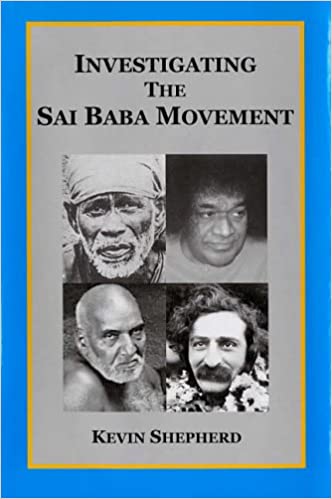 |
Ott and Karavias militated against Investigating the Sai Baba Movement. Karavias referred dismissively to “the theory of a movement,” evidently not having read the book. He had no idea of the significances and complexities. Ott and Karavias were beyond theory as suppressive avatar ideologues, their Meher Baba article being viewed (by them) as virtual sacred text. The zealous preserve was gridlocked by their discussion page patrols fixated on dogma and superiority complex. Two real name editors were mistakenly identified as Sam Shepherd in disguise. The obsessions and errors passed muster as expertise, capped by the excelling auspices of a California University.
Elsewhere, my salvaged book was actually read. Interested analysts viewed this work as an alternative to the Sathya Sai paradigm, creating a line of reasoning that Shirdi Sai, Upasani Maharaj, and Meher Baba were more appropriate representatives of the Maharashtrian “movement.” One dispute relates to the SUNY Press (State University of New York) promotion of a well known work on Shirdi Sai Baba by Dr. Antonio Rigopoulos (published in 1993), conflating two regional developments. Ott and Karavias were effectively following the simplistic Moreno (and Fresco) preference for Sathya Sai, whose career in Andhra was at a geographical and behavioural tangent to the predecessors. These matters could not be allowed to surface on Wikipedia, where the author of Investigating was downgraded via resort to Moreno blog libel. Neutral Point of View has often been very suspect.
In 2012, Jimmy Wales prudently deleted the Moreno (SSS108) User page, not being in any way a fan of either Holy Joe or Jossi Fresco. Indeed, Fresco had gained the widespread reputation of a cult strategist in his partiality for Prem Rawat, another controversial guru of the commercial publicity era. Fresco openly acknowledged that he was employed by an organisation closely associated with Prem Rawat. This self-declared "renaissance man" met with some resistance, making his exit from Wikipedia in December 2008. For years Fresco "maintained strict control over the site's Prem Rawat article and countless related articles" (Cade Metz, "Lord of the Universe" disciple exits Wikipedia). A similar control was exercised by Christopher Ott in relation to Meher Baba category articles. Fresco soon reappeared on Wikipedia, using a pseudonym, with the intention of again controlling the Prem Rawat articles. He was detected and banned by administrators in 2009 (Wikipedia bans Fresco).
The User page of Jossi Fresco was thereafter rendered inoperative. The administrative message at that page read: "This account has been blocked indefinitely because CheckUser evidence confirms that the account's owner has abusively used multiple accounts" (User Jossi, accessed 10/04/2020). The Wikipedia terminology signifies that Fresco had committed a cardinal crime.
Moreno had a similar orientation to Fresco and Ott, meaning the attempt to exclusively supervise Wikipedia features about a chosen figurehead. The editorial focus of Moreno was the article on Sathya Sai Baba, which he regarded as a partisan preserve. He was enraged that his ex-devotee opponent Robert Priddy had become the subject of an author article on Wikipedia. Moreno tried to block and suppress that article. He loathed my book Investigating, because that was cited in the Priddy article, affording a prestige reference for the subject. Because this book favourably cited Priddy in an appendice, the entire content was proscribed by the Moreno-Fresco alliance. Ott followed on with this censure.
In 2012, real name editor Stephen Castro found that Ott and Karavias blocked his suggestion for a new feature on critics of Meher Baba, primarily Paul Brunton. The two devotees were obstructive to the extent of deleting the new article Meher Baba's Critics, even though this was favourable to Meher Baba. Castro afterwards placed his amplified article on another website. The effective meaning of deletion was that Meher Baba had no critics; if he did, they should not be mentioned. Simon Kidd concluded that a basic reason for deletion was the inclusion of my books in the article bibliography. Castro was so disgusted with the "Meher Baba blockade" that he ceased activity as a Wikipedia editor. He regarded Wikipedia as a lunatic asylum.
From an ex-devotee website, 2008 |
According to Newell, I was trying to change the Wikipedia Meher Baba article. In reality, I was a complete outsider to Wikipedia, a mega-site which trashed me through the User page of a cult zealot and a deletionist page stimulated by other cultists. Wikipedia was heavily manned by sectarian interests at that period. I made an objection to the Moreno-Fresco User page in 2007, on my first website. Joe Moreno then allocated me a space on his Inquisition site known as saisathyasai. The Google listing in my name was assaulted with several derisive entries, achieved by a virulent form of SEO. The underlying message was: Don’t tangle with Joe, defender of the avatar Sathya Sai Baba.
For the next few years, I had to fend against the internet campaign of Moreno, using webpages to contest the misrepresentation. At one point, the Google listing in my name showed almost twenty hostile entries from the cyberstalker. He used various forms of attack, culminating in a separate site claiming to expose me. This was part of the Moreno “Exposed” series at blogspot, reserved for strong objectors to Pro-Sai tactic; most of the other victims in that select target series were ex-devotees like Priddy.
Moreno dismissed philosophy, following a Nietzschean commentator. He was here deriding my orientation as a "citizen philosopher," a phrase I have used. Philosophy was merely "a sport for jackasses" in the cultist sphere of calumny. The priority was libellous activity in defence of the avatar. During his last year, Moreno became increasingly exaggerated in his accusations, possibly because he was getting desperate. Some of his libel victims were consulting lawyers; he probably feared the potential consequences.
My orientation as a citizen philosopher commenced the online feature Commentaries in 2009. The first article, entitled Citizen Philosophy, mentioned adaptation to a blog format (basically short read, but nothing resembling a tweet). I there stated: "I do fundamentally regard myself as a philosopher." I survived attacks from Moreno and harassment from Wikipedia. The presentation of long read articles, on six other sites of mine, may produce problems of interpretation for those unwilling to read or assimilate detail. The tweet society imposes a curb on literacy, while encouraging trolls and scammers.
An Indian victim of Moreno image distortion at an attack blog, 2005 |
Holy Joe had no academic background, no author role, no attested library study. He was strongly averse to reproduction of his sole known image, fearing recognition. Critics who reproduced his image online were the target of vehement threats, even while he zealously reproduced and distorted the images of his victims. All is fair play in the ugly game of sectarian license and apostolic status. The inflation of avatar followers can be demoralising, even deadly.
In his Jungian lecturing on YouTube, Dr. Newell created an aspersion reminiscent of Moreno, ignoring all context and available documentation. Newell imposed Wikipedia noodge editorial activity upon an outsider to Wikipedia who was afflicted by User pages (plural), talk pages (plural), and a deletionist page. The lastmentioned page deleted the Kevin R. D. Shepherd article in 2009. That deletion was opposed by Simon Kidd, who also became a victim of Moreno, while in the process grasping the extent of ideological virus percolating Wikipedia.
The misleading story of Newell, that I was trying to improve the Meher Baba article on Wikipedia, demonstrates inability to cope with sources. I am not a devotee, and did not rate the article. I merely complained on my own site that one of my books had been deleted from the attendant Wikipedia listing. I also pointed out, on the present site, that one of the works preferred by Ott has only a very brief reference to Meher Baba (section 1 above). Newell fails to mention the persons who actually did make suggestions for improvement at the article he mentions. These petitioners were two real name Wikipedia editors (Kidd and Castro).
More recent Wikipedia personnel expressed discontent with devotee articles, eliminating a number of these in relation to Meher Baba. Most of the deleted articles were created by Ott, an exception being the Sheriar Mundegar Irani article, commenced by a British academic inspired by my book on that figure. This article was appropriated and adapted by Ott, the original composer subsequently moving to Citizendium in exasperation. Dr. Dean accused the interloper of turning his article into "a devotional exercise" (Wikipedia Biases and Sectarian Strategies).
Dr. Ray Kerkhove |
An author of numerous academic papers, Dr. Ray Kerkhove (University of Queensland) is a historian who was not impressed by Wikipedia tactics. An authority on the Australian aborigines, he also has an academic interest in Meher Baba. Dr. Kerkhove has described his dissatisfaction with devotee Wikipedia process at the Meher Baba article.
In a communication to the present writer, dated 11/10/2019, Kerkhove complains that he was “blocked” by editor Christopher Ott (Dazedbythebell) from contributing to the article. “To say I was stunned would be an understatement.” His lengthy Dissertation on Meher Baba, including an extensive bibliography, is indisputable proof of serious interest in the subject. This academic also writes: “It made no difference to Ott et al that I had a Doctorate. When I explained I had this qualification, he [Ott] said there was no room in Wikipedia for ‘theorising’.”
Further light is cast by Dr. Kerkhove on the situation obscured by Newell. Ott “sees the Wikipedia article [on Meher Baba] as his baby that no one may add to, even though it is based on a very limited bibliography.” In the same communication, Kerkhove adds: “The Meher Baba article is very flawed; it is turning people against Meher Baba.” Strong support for this contention exists in the fact that recent Wikipedia investigators (including a rigorous Indian critic) proved averse to the same article, finding many of the sources to be unduly partisan; devotee editors Ott and Karavias were relegated in the reappraisal.
Dr. Kerkhove also comments: “There is almost zero interest or appreciation for a scholarly approach to [Meher] Baba within the Meher Baba movement.” Kerkhove here refers to a few Western devotees with academic credentials. However, he complains: “None of them see the importance of writing for an audience broader than the ‘true believers’ (and even that little pool is getting tainted with ever-deepening orthodoxy and parrotry).”
The general impression conveyed by Ott and Karavias, on discussion pages, was that only they had the practical application required. Their rivals were mere theorisers. These two presumed paragons eventually fell from grace in 2018. The following year, another Meher Baba devotee editor (pseudonym Nemonoman) reappeared on Wikipedia, attempting to assist the receding Ott and Karavias. These exemplars of talk page harassment were now under close surveillance. They were suspect ideologues failing the criterion of neutral editorship.
Nemonoman tried to deceive Wikipedia personnel by asserting that he was an acquaintance of mine. I have repudiated this false claim elsewhere. He also tried to evade a difficult editorial situation by describing me as a “Baba Follower.” Just like himself, of course. The gap between myself and Nemonoman is more than a million miles wide. The Followers can relegate a victim from Wikipedia as an alien, and afterwards claim that the victim is a Follower. Superficial equality at a hypocritical cost to reality. The degree of hostility, misconception, and ruse is sufficient to justify a strong warning against the tactics of pseudonymous Western Meher Baba devotees on a well known online encyclopaedia.
In his YouTube talk, Dr. Newell states that he is not going to take up the “long story” of Adi. S. Irani (brother of Meher Baba). He does not mention any source on this figure, remaining silent about the webpage Meher Baba Movement (that you are now reading). There is an effective curb on documentation and history, replaced by preferences of interpretation in vogue amongst devotees.
However, one devotee at Myrtle Beach is exempt from any association with the screening tendency. David Silverman has sent me communications evidencing courtesy and consideration, even expressing his desire to place online a PDF of my early book Meher Baba, an Iranian Liberal. I myself am not requesting any PDF, especially as I may compose a second edition of that work. Nevertheless, I appreciate the goodwill encountered in this instance.
Sheriar Mundegar Irani |
In a related talk on YouTube, Dr. Newell referred to Sheriar Mundegar Irani (d.1932), the father of Meher Baba. Someone asked him: “Is Kevin Shepherd’s book reliable?” The speaker was not aware of this book on Sheriar. Indeed, he asked wonderingly: “Is there a book on Sheriar?” The answer, from the audience, came in the affirmative. Newell responded: “He [Shepherd] is a very scrupulous scholar, so probably [the book is reliable].” He was not trying to disparage the book in any way. A member of the audience commented: “It’s really thick,” meaning my book From Oppression to Freedom (1988). This may refer to the thickness (nearly one inch) of the hardback book, in comparison to many thin paperbacks familiar today.
There has been no equivalent book about Sheriar Irani. A second edition is planned. I contributed online the first lengthy overview of this figure, complemented by another item with a bibliography. Both of these articles cite From Oppression to Freedom. Nevertheless, Newell was not aware of that book on Sheriar Irani, a factor pointing to undue neglect of the author he misrepresents in another talk on YouTube.
In a different direction, Dr. Ray Kerkhove (living in Australia) has proved exemplary. The best academics are those very careful not to make any error, and who apologise when any error emerges on their part, revising their angle accordingly. The objective is ever-increasing accuracy, as distinct from errors, opinions, and “closed circuit” preferences (familiar on Wikipedia). Dr. Kerkhove has acknowledged certain flaws in his own Dissertation; in the process of discovery, he has thrown new light upon the Meher Baba movement in Australia.
The surpassing approach of Dr. Kerkhove scrupulously ascertained relevant details about a devotee library in Australia, while making a personal visit to that establishment. Very briefly, he disproved confusing themes of a prominent “orthodox” devotee who gave the wrong impression to an Australian barrister about literature relating to Meher Baba. Dr. Kerkhove has convinced me that many Australian devotees of the Irani mystic are tolerant and progressive in their approach, a feature not always found in religious movements.
Kevin R. D. Shepherd
April 2020
Since this article was placed online three months ago, a mood of insidious hostility has been discernible at the Meher Baba talkpage on Wikipedia (section 1 above). On 29 May, 2012, HumusTheCowboy there stated: "I now dislike Shepherd a lot and I never even met him." The strong implication here is that if he met me, he would dislike me even more. This very pointed assertion comes from an ostensibly American editor identifying himself as a Sufi follower of Meher Baba. Obviously, I will have to take great care not to meet such people. The fact that such animosities can be broadcast on Wikipedia, in the guise of a presumed encyclopaedic expertise, is no legitimate reason for a non-Sufi and non-devotee to be stigmatised as a target for dislike.
A devotee colleague of HumusTheCowboy was Hoverfish. This editor conveyed the erroneous impression (on the same talkpage) that I innovated the "Sai Baba movement" theme. "The theory of a movement begun by Sai Baba of Shirdi which included Babajan, Upasni Maharaj, Meher Baba, and Sathya Sai Baba will have to find its way to fame the proper way" (Meher Baba talkpage, 28 May 2012). This adverse judgement was clearly implying the inferior status of my output, suppressed on Wikipedia by devotee tactics. Suppression and misrepresentation is not the proper way, even if Wikipedia does permit extensive improprieties from the Meher Baba movement.
In actual fact, the "Sai Baba movement" theme was created by an American academic forty years ago, and in a learned journal, as is well known in the more informed circles. In 1985, a related book was published in India with the title of The Sai Baba Movement. This theme was further broadcast to fame in the 1990s by the State University of New York Press, who explicitly used the label of "Sai Baba movement" to describe a SUNY volume on Sai Baba of Shirdi. The author of that well known work included reference to all the names mentioned by the obscurantist Hoverfish. Furthermore, I contested this theme in the full length book Investigating the Sai Baba Movement (2005), a work that has been suppressed for years in the Meher Baba article on Wikipedia, an article maintained by Meher Baba devotees.
In such instances, the chances of fair representation on Wikipedia are negligible, the cult biases being too intrusive. In more general terms, the pseudonymous context and tactics of Wikipedia personnel are notorious.
A widely held viewpoint amongst university academics is that Wikipedia articles are unreliable and uncitable, and that Wikipedia talkpages represent an even more questionable factor of reference.
June 2012
In July 2013, an American devotee of Meher Baba cordially sent me an appreciation of my book Meher Baba, an Iranian Liberal. This man had read the present web article, and seemed concerned at the record of events. He was familiar with recent developments at the Myrtle Beach Centre. His review of Iranian Liberal included the following comments:
"It was slightly off-putting at the beginning due to a pedantic academic style, but I ended up feeling that the spiritual insight expressed was quite worthwhile and, as I wrote earlier, there is nothing that I found unreasonable or would particularly disagree with. I skipped some of the religious and philosophy sections because of a lack of background to fully understand your exposition. Your insights into the gifts and perspectives of people like [Charles] Purdom and the Backetts have merit."
December 2013
More recently, I would like to thank Mik Hamilton for providing a generous online acknowledgement of Iranian Liberal. An American, he was one of the relatively few Westerners to encounter Meher Baba during the 1960s, after the East-West Gathering in 1962. He gained a meeting at Meherazad, along with his wife Ursula, on March 7, 1966. Meher Baba warned these young people against taking drugs. The gist of his anti-drug message on that occasion was: "Neither by smoking marijuana nor by ingesting LSD, or any other pharmaceutical substance, can one realise the God state" (Kalchuri et al, LM Vol 19:6431).
January 2021
My mother, Jean Shepherd (1928-2017), was a follower of Meher Baba from 1962. She received many communications from this mystic, in the form of letters and cablegrams. These messages were so numerous and diverse that Adi S. Irani commented upon this factor with great surprise. In 1966, Adi (Meher Baba's brother) said that he did not know of any other British follower with such a record of communications at that period. Adi also informed that she had been in receipt of [substantially] more communications from Meher Baba than he had himself received during the years 1962-1966.
The general scarcity of personal communications, from Meher Baba, was well known amongst both American and British devotees during the 1960s. Meher Baba was in a near-constant form of seclusion (and semi-seclusion), not being accessible like many Indian gurus (a matter that is seldom comprehended by those unfamiliar with the details). During his last years, relatively few persons received more than one or two communications from him.
Communications from Meher Baba to my family continued until February 1967. By that time, and insofar as I am aware, none of the other British followers were receiving many or any personal communications. At that period, Adi S. Irani received letters from his sister Mani at the ashram, but not from Meher Baba (who did not write anything). My mother and myself received direct cablegrams from Meher Baba (I also received brief messages from him relayed in letters from the ashram). Less than two years after the last cablegram, Meher Baba died at Meherazad ashram.
My mother died forty-eight years later, in January 2017. She was now a complete outsider to the Meher Baba movement, which she regarded critically, because of the eccentric behaviour, hostility, and insularism of Western devotees. Despite backward traits of the disconcerting Meher Baba movement, she never lost her respect for Meher Baba. The only online source, within the Meher Baba movement, to acknowledge her existence (after her death), was the website of devotee Anthony Zois. This gesture is substantially negated by the hostile verdict of Zois at the same site (his entry on Ann Powell): "Jean Shepherd's son Kevin has written somewhat bias [sic] articles about the early English group" (accessed 29/04/2022). Zois even links to my section above on Ann Powell. That celebratory notice was the first to clearly identify Ann on an old 1930s photograph. The longer unpublished notice about Ann Powell (in my Life of Meher Baba) is also unbiased.
In more general terms, the status of any complaint, however legitimate, is ignored by Western devotees, a fact registered by some outside parties. I have been realistically described as a cult survivor.
The more extensive details about Jean Shepherd include a statement made in her last years. At Wimborne, she said that she did not wish to be associated with the surviving British and American devotees, whose aggregate outlook she regarded in terms of an ideological straitjacket. Until her death, she was erroneously identified with another English female follower of Meher Baba who made a serious error. That misconception, created by the mandali, lasted for over fifty years until her death. None of the devotees informed did anything to rectify the calumny, which is still not addressed.
February 2016-April 2022
(1) See further Shepherd, Meaning in Anthropos: Anthropography as an interdisciplinary science of culture (1991), providing a format of themes and guidelines. See also Philosophical Anthropography. My version of Zoroastrianism was first charted in Minds and Sociocultures Vol. 1: Zoroastrianism and the Indian Religions (1995), pp. 203-388. A supplement is provided in my web article Zarathushtra and Zoroastrianism. See also Suhrawardi and Ishraqi Philosophy. An account of Meher Baba's father Sheriar Mundegar Irani (d.1932) was included in From Oppression to Freedom: A Study of the Kaivani Gnostics (1988), part one. On the Kaivan school, see further Azar Kaivan and Zoroastrian Ishraqis. The book Meher Baba, an Iranian Liberal (1988) may be described as an independent treatment, divided into four parts, with an annotated bibliography. The title derives from the subject's Irani background, his parents both being emigrants to India from Central Iran. A sequel coverage was included in Investigating the Sai Baba Movement (2005), part three. See also Meher Baba and Yazd. See also Shirdi Sai Baba and the Sai Baba Movement. See also Hazrat Babajan, Faqir of Poona.
(2) Kate Thomas, The Destiny Challenge (1992), chapter 3. There have been some persons who queried the reason for my mother's apparent pseudonym. Thomas was in fact her legitimate name by a second marriage. Kate was a name she always liked, being the name of her grandmother. Several factors conspired in her avoidance of other family names, including the strong objections of my father (her first husband) to being mentioned in print. I myself emphasised that she should not disclose very much about Adi S. Irani while he was still alive, in view of the potential problems involved. This consideration meant that, for many years, she could never give the full account. My mother also includes such factors as dreams and mystical experiences, which are not part of my own emphasis. I had disagreements with her about this matter, eventually desisting in view of the fact that she had been oppressed by men all her life, starting with her father, who callously prevented her from attending Girton College (Cambridge); he opposed her schoolteachers because of economic considerations. My own atheistic (and subsequently agnostic) father fought her mysticism to a pronounced degree. The bludgeoning Adi S. Irani was another ogre in the hostile landscape, not forgetting the proscribing superstar Pete Townshend. Her first published book was written under a male pseudonym, as she felt this gesture was the only way to ensure that men would read it.
(3) The online Lord Meher states that Adi "had become partners with Fred Marks in an antique business" (page 3973, accessed 18/11/2015). No source is cited. In fact, Fred Marks was never an official partner in that business. Furthermore, he received no pay for his services, which were rendered free, of necessity. This was because Adi did not like paying for work done. That was one of the grievances which Fred conveyed to me. Adi was not a leading businessman, and not wealthy as far as I could discover. During his first years in London, Adi seems to have possessed very little money, encountering difficulty with livelihood. Fred had previously worked in several roles, and himself was never a prominent dealer. However, Fred really did know about English furniture. Adi utilised Fred's knowledge, not himself possessing such expertise for some years. Adi was nonetheless astute, and also capable of hard work. I once watched him strip down a pine chair, working in the hot sun. I was impressed to find that his workshop was of good standard, with many tools. Nevertheless, he seemed to purchase mainly in the cheaper range. Adi asked me to accompany him on a buying trip to antique shops in his home locality. He was very talkative in the shops, saying that the goods on offer were too expensive; he instead purchased (merely for use in his home) a recently manufactured domestic light tube for one pound. In 1973, I worked for Adi for two days, without any pay. I was evidently not the sole instance of this activity. In recent years, internet data has relayed that Adi "would make young people work while staying at his house." Two of his younger relatives are reported to have spent a lot of time, in the 1970s, carrying items down from the attic to Adi's workshop and back up again afterwards.
(4) The extent of Adi's lapse from an "ambassador" role was pronounced. Inder and Fred Marks provided some revealing details about how Adi invited funds from devotees for "Baba's Centre," which transpired to be his own home. In this way, the ambassador was conveniently able to install central heating in his London abode. Fred and Inder were both donors in this deceptive project. Inder described how Adi more than once tried to get him drunk on whisky, a tendency which the abstemious Hindu resisted. Fred had another strong grievance that he repressed for years, feeling unable to discuss the implications. This related to the episode in which Adi appropriated his harmonium, which Fred liked to play in the evenings and on weekends. Adi acquired this treasured possession via his fluent theme of "Baba's work" and "Baba's Centre." Adi gave the harmonium to his young daughter; the instrument stayed in his own house. Fred eventually admitted, in the 1970s, that Adi had serious flaws. In 1973, Adi told me that he thought writing was useless. He asked me why I did not become a businessman instead of composing my unpublished work on Meher Baba in four volumes. He made his basic interest quite obvious on that occasion. He considered me of potential use to him as an unpaid assistant.
(5) Beryl Williams had first met Meher Baba in 1952. "I found that the American negroes in the movement were much more helpful than most of the other Westerners" (Shepherd 1988:290). I doubt whether the black American devotees were consulted by the Meher Baba Centre elites in 1988, when a document was sent on my behalf to those dismissive Centres. The elites were all white Americans.
(6) Inder addressed his letters directly to Meher Baba, generally receiving replies via Eruch Jessawala. He ended every communication with the refrain of "Thy will be done." In 1965, he obtained Baba's permission to return to England, although he did not stay long. The reasons for his sojourn were obscure. He gave an explanation that the best medical treatment was available in England. Yet he did not receive such treatment. I learned that his father was responsible for the medical suggestion. Inder did initially visit a hospital (at the wish of his father), but the doctors there could find nothing wrong with him. If he was concerned about his health, they said, he could be an outpatient. He described this situation to me in a jovial manner. I grasped that such behaviour was intimately linked to something Meher Baba had recommended for him and other devotees in the past. "Take due medical advice." Meher Baba was not an alternative therapist. There are several references to doctors in the Inder Sain letters, evidently intended to prove that he was being scrupulously attentive to Meher Baba in such resort (thereby satisfying his father Harjiwan Lal). However, Adi K. Irani interpreted this precautionary action (of consulting doctors) to mean that Inder was in constant need of medical assistance, and therefore suffering from a form of mental illness. The aspersive argument was actually quite ridiculous. In 1966, Inder was treated by a doctor for fever, a common ailment in India, and nothing to do with depression. In Bombay during 1966, he became subject to a high blood temperature, afterwards moving to New Delhi, where medical diagnosis implied a kidney infection. When this condition improved, he returned to Bombay. Even then, he still had to be careful, being prone to a recurring form of fever. Mumbai (Bombay) does not possess the most salubrious climate. Inder was not accustomed to the region, having spent ten years in England. On Meher Baba's contact with a famous doctor, see Jessawala 1995:41-51. Dr. Ram Ginde of Bombay, a leading neurosurgeon in India, was persuaded to visit Meher Baba at Meherazad, to assist with the latter's problem of trigeminal neuralgia. In subsequent years, Dr. Ginde visited the Irani mystic many times, becoming a virtual devotee. Indeed, on the day of Meher Baba's death, the shock of this event was such that Dr. Ginde suffered a heart attack (fortunately not fatal).
(7) The Kalchuri-Fenster version of Adi Junior is not complete. Adi's version of Babajan here relays that she talked in different languages, a mix which he found unintelligible as a youth attending high school. Adi could speak Persian, but did not know Pushtu, and was not an expert in Urdu dialects. This reflection (of mine) does not rule out Arabic complexities. Babajan once told him in clear Persian: "Speak the truth, no matter how bitter it may be" (Lord Meher online, p. 561, accessed 18/11/2015). The quote is also found in a source of an earlier date, being reproduced elsewhere. The exhortation to truth made a strong impression upon Adi, perhaps because this reflected a cardinal Zoroastrian emphasis upon speaking the truth. Adi's career as the "ambassador," in his later years, is fraught with implications of compromising the truth, as some reports (and his own admissions) reveal. These details are not found in the pages of Lord Meher.
(8) Thomas 1992:130-131. Cf. Kalchuri et al, Lord Meher Vol. 20 (Reiter edn, 2001), pp. 6689-6698, which has no reference to the confrontation. Adi Junior arrived at Meherazad on December 20th, 1968. He stayed at the ashram for most of the three weeks sojourn, while his family stayed in Ahmednagar. Meher Baba had agreed to the wedding festival of Adi's Zoroastrian son Dara and the Hindu girl Amrit. "Mixed caste marriages were then extremely uncommon in India" (ibid:6692). Meher Baba, now in a wheelchair, would daily go to the mandali hall until January 12th. Baba would also relax outside in the sun, again communicating with the mandali at this juncture. Adi Junior was present on these various occasions. The drama concerning God Speaks escaped reporting in Lord Meher. The wedding celebration gained the limelight. The mandali were now alarmed at Baba's deteriorating health. The online version of Lord Meher has also lacked reference to the confrontation (accessed 23/11/2015).
(9) See further B. Kalchuri, F. Workingboxwala, D. Fenster, L. Reiter et al, Lord Meher (Meher Prabhu): The Biography of Avatar Meher Baba (Reiter edn, 20 vols, 1986-2001). The much shorter original of this work was composed in Hindi during 1971-72, becoming known as Meher Prabhu. Some internet features declare that Kalchuri worked 15-18 hours a day, "writing like a machine, and not thinking about what he was writing." A subsequent lengthy sequence of editing and amplification greatly swelled his Meher Prabhu manuscript. The American devotee Lawrence Reiter exercised a strong influence as the publisher of Lord Meher, extending to 20 volumes and nearly 7,000 pages (the text was inflated by many hundreds of photographs). David Fenster has for many years been adding materials, also visible in the online edition. Kalchuri's name amounts to a status profile for this much enlarged work. Some relevant commentary is afforded in Christopher Ott, How Lord Meher came about (2015). In my own accounts, I have frequently cited from the Reiter volumes. However, flaws are discernible in the presentation. There are 26 indexed references to Bhau Kalchuri in my Investigating the Sai Baba Movement (2005), despite the rejection of that book by the hostile Ott circle of Meher Baba devotees on Wikipedia. For Kalchuri, see also the details in Sheela Kalchuri Fenster 2009. See also note 2 of my article Wikipedia Anomalies Sequel, on this website. Another multi-volume work on the main subject, although less extensive in coverage, is Bal Natu, Glimpses of the God-Man, Meher Baba (1977 onwards), commencing at the date of 1943.
(10) For the radical findings on Paul Brunton, see Shepherd 1988:146-176. The convergent, but sabotaged, Wikipedia article by real name editor Stephen Castro is preserved at Critics of Meher Baba: Paul Brunton and Rom Landau. The Wikipedia real name academic editor Simon Kidd expressed his verdict at the talk page of Meher Baba's Critics on 21 February 2012, including the observation: "The only source they [Hoverfish and Dazedbythebell] really don't want to use is Shepherd, perhaps because his books have been sidelined by the Meher Baba movement, apparently because they contain some inconvenient truths." The article Meher Baba's Critics was deleted, with ominous threats to this effect from the start by Ott and Karavias, despite the fact that Meher Baba was here favourably represented. The author evidently decided to concur with deletion rather than see the content mutilated. Observers lamented the presence of a petty "closed circuit" bias on Wikipedia, undermining due information. That bias was maintained by Ott and Karavias, alias Dazedbythebell and Hoverfish.
(11) Shepherd, Investigating the Sai Baba Movement (2005), p. 260 note 468. This book was also attacked in the Wikipedia pro-sectarian campaign associated with editor Hoverfish and administrator Smartse. See Attack Forum. Part Three of Investigating is about Meher Baba (pp. 105-161). Notes 300-480 also relate to Meher Baba, being found on pages 204-268. The amount of suppressed information, and the relevance or no, is an issue that may be left more authoritatively to real name scholars outside the Wikipedia circuit and the Meher Baba Centres. In the field of religion, Wikipedia has gained a reputation amongst academic specialists for being a pronouncedly unreliable indicator of relevant data.
(12) See Meher Baba, an Iranian Liberal, pp. 271-2. The listed unpublished biography was composed during the years 1967-77. The unpublished manuscript is entitled The Life of Meher Baba. The prospect of "a condensed one-volume version" was here mentioned.
(13) Ward Parks, ed., Meher Baba's Early Messages to the West (2009), pp. 223-4 notes 31-32, referring to Paul Brunton and Rom Landau. The acknowledgments inform that "this book was edited by Ward Parks with the advice and guidance of Meherwan B. Jessawala" (ibid:458). The acknowledgments are in small print, not always readily detected by readers. Some internet features identify Dr. Parks as a devotee of Meher Baba since 1970. He gained a doctorate in English literature, becoming a Professor of medieval studies at Louisiana State University. In 1993, he left the academic world to live in India. See also note 27 below.
(14) Mossman 2012:107. The author adds: "A reader of The Wayfarers quite naturally recognises that while the 'who, what, when, and where" are covered in precise detail, the 'why' remains an unanswered mystery" (ibid). Meher Baba himself is here strongly implicated in the non-disclosure. However, a different angle is possible, in relation to the who and what, and in the pursuit of context (an angle ventured in my unpublished manuscript The Life of Meher Baba). This treatment was not the same as that found in Lord Meher or the version of Natu 1977. However, Natu appropriately observes, for instance, that "from January to December 1946, Baba seemed absorbed in mast work alone" (Natu 1977:153). The same writer adds: "There were no darshan or sahavas programs, not even a meeting with the mandali" (ibid). Another version of the activity in 1946 can be found in Kalchuri et al, Lord Meher Vol. 9 (1996).
(15) See Purdom, The God-Man (1964), published during the lifetime of the subject. An earlier version was Purdom 1937. A number of readers have perceived that Purdom's style of reporting was not devotional, contrary to the idiom found in many other works. See also Purdom's autobiographical book Life Over Again (1951). See further Shepherd 1988:190-207, 264-5.
(16) David Fenster, Meher Darshan (1985). In this preliminary item of Lord Meher Vol. 1, Fenster describes the inception of Meher Darshan and Meher Prabhu. The Hindi poem known as Meher Darshan contains 14,000 couplets, evidently being intended for the devotees at Hamirpur, in North India. Fenster says that the poem was sung by the Hamirpur people. He gives the date of publication as 1985. Meher Baba had visited Hamirpur with considerable success in 1954. Hindu devotees throughout Hamirpur and Andhra had sent letters to him, pleading for him to visit their towns and villages (Natu, Glimpses Vol. 5, p. 19).
(17) Feram was closely associated with Adi K. Irani, living in the latter's abode at Ahmednagar, helping with correspondence. He was noted for his diligence as a typist, a capacity in which he had assisted William Donkin during the 1940s, in the distinctive book entitled The Wayfarers. Feram gained a repute for eccentricity. He is described in one account as a misogynistic character, typing during the day, reading English novels in the evening, complaining about the servants, and reputedly afflicted by a ghost (Kalchuri Fenster 2009:641-3).
(18) Kalchuri's daughter Sheela describes some other events at this period, including an episode in which Bhau encountered difficulty with the other mandali at Meherazad. When he wished to live in Ahmednagar, Rano Gayley said that he could not take anything from Meherazad, including his notebooks. "Bhau was reluctant and nervous about upsetting the others, but he did not want to leave his writing work at Meherazad for fear it would be discarded" (Kalchuri Fenster 2009:765). Sheela adds: " 'How could Baba's mandali act like this with my father?' I wondered. It was a rude awakening. Already they had neglected Bhau's health, but what about Baba's orders and work?" (ibid). Sheela is quite frequently realistic about the mandali; she clearly did not regard them as infallible, contrary to a more prevalent conception amongst devotees. The book by Sheela Kalchuri is very unusual in this respect. For instance, she remarks of some occasions when anger surfaced: "I always wondered why Baba kept such mandali around him. Baba would tell them to be quiet, but they would continue to argue" (ibid:190). Sheela also reports that Baba once remarked: "They (the mandali) think they understand better than I do; they think they know everything" (ibid:191). Inder Sain had some similar reminiscences during the 1960s; he only expressed these in private meetings. Such reflections would have seemed blasphemous to many devotees. Inder was simply telling the truth, on the basis of personal observation.
(19) Bhau Kalchuri was not fully conversant with Gujarati and Marathi. Feram assisted him to organise material from the records kept for many years by Adi K. Irani at Khushru Quarters. "Many of the letters and diary notes were falling apart, " a thick layer of dust testifying to the general neglect (Kalchuri Fenster 2009:766). The major diaries include those of F. H. Dadachanji (Chanji) and Ramju Abdulla. Chanji's diary was almost legendary, but still tangible, and "difficult to decipher" (ibid). The English diaries of Ramju Abdulla were easier to publish (Deitrick 1979). The wartime diaries of Dr. William Donkin have also been presented (McNeill, ed., Donkin's Diaries, 2011). The later diary of Kishan Singh was commemorated in my book Gurus Rediscovered (1986), which aroused disagreement on the subject of miracles. Cf. Marianne Warren, Unravelling the Enigma (1999), who was unable to locate a relevant source mediating the Singh diary, being at a disadvantage accordingly.
(20) In his Erratum of 2000 (Lord Meher Vol. 17), Reiter has the statement: "Financed by Lawrence Reiter, from 1980 to 1985, Bhau Kalchuri had additional translated material compiled which was inserted in the original manuscript." This was a reference to the compilation by David Fenster. Subsequently, this supplement was described in terms of: "Reiter also paid approximately an additional fifteen thousand dollars for financing the compilation of various notes, translated documents and audio tape interviews to be inserted in chronological order and typed by David Fenster over a period of five years (1980-85)" (endnote to page 6707 in Lord Meher Vol. 20, 2001). The increase from 2,900 to 4,400 pages is here recorded. According to the 2014 internet article by Christopher Ott: "Fenster in turn continued to type stories from English sources, and to insert these, compiling into the manuscript whatever sources he felt were relevant."
(21) The first volume of Lord Meher featured good quality paper and numerous photographs. This format continued in subsequent volumes. Lawrence (Hermes) Reiter became a devotee of Meher Baba in 1966. He was one of many who did not meet the Irani mystic, and nor gain communications from him. Reiter successfully pursued a project of salvaging over 2,000 photographs relating to Meher Baba. Some of his idioms tend to reflect those current at that period amongst American devotees; these idioms were not in evidence during earlier years prior to the late 1960s. Reiter also expressed some phraseology that was uniquely his own. For instance: "This biography of Meher Baba's life is a blessing for humanity, but a curse for Lawrence Reiter" (Lord Meher Vol. 17, 2000, "What Words Will Allow," unpaginated).
(22) Reiter self-published 20 volumes of Lord Meher. He was in a financial predicament by 1990, having at that time published only five volumes. Volume Six did not appear until 1994. From then on, Reiter commenced to publish "two volumes in one" as a financial expedient. This meant a final total of thirteen volumes. The declaration of 20 volumes is misleading in that respect. Reiter was only able to continue because of funding from wealthy devotees, including the branch known as Sufism Reoriented. Subsequently, devotee trolls on Wikipedia blacklisted my books on Meher Baba as self-published, while glorifying the self-published Reiter volumes and the online edition of Lord Meher.
(23) The subject of Meher Baba photographs is not without interest. The Reiter volumes included many hundreds of images, but not all the captions are necessarily accurate. Some dates can be disputed on the basis of much earlier photographs which I purchased from India in 1966; these have details handwritten on the reverse by one of the mandali.
(24) This statement comes from the unpaginated preliminary entitled Something Superhuman. Reiter adds with retrospective honesty: "I see now there are a number of defects, but that is reconciled as human imperfection." Other readers have also perceived defects in the existing multi-contributor version. Some issues are not reconciled. A contrasting and uncritical partisan attitude assumes that the text of Reiter Lord Meher is excelling, being incontestable fact throughout. Wikipedia has been one avenue for the misleading enthusiasms, the commentators being pseudonymous. See further Lord Meher Critique.
(25) See "Meherwan Jessawala's Account of the Finding of the Manuscript" in Meher Baba 2005:591-595. The account dates to 1999. Jessawala here makes the request that "none should get embroiled in the needless controversy" as to whether or not the Infinite Intelligence manuscript is identical to the "lost book" of Meher Baba composed in 1925-26. According to Jessawala, "it is best left for each one to decide for oneself, either way" (page 595). He mentions that Bhau Kalchuri and Ward Parks had recently begun to edit the manuscript. Jessawala emphasises: "This led you [Bhau Kalchuri] to surmise that the handwritten volumes must be the transcript of the original Book written by Baba!" Jessawala is clearly saying that a surmisal does not necessarily represent fact. Different views have been expressed about the origin of this early manuscript. The handwriting of the manuscript is not that of Meher Baba. "No explicit indication of authorship or date of composition appears anywhere on the Intelligence Notebooks" (editorial essay, Infinite Intelligence, pp. 495-6). A much shorter document from an early period is in Meher Baba's own handwriting. See Meher Baba 2000. A prominent interpretation dates the longer manuscript to the period 1925-26, and reflects: "While the underlying content undoubtedly derives from Meher Baba, the form and style of its presentation may owe to the hand of the redactor" (editorial essay, Infinite Intelligence, p. 525).
(26) Eruch evidently thought that American devotees were being extremist, via the indifferent and dismissive attitude associated with the Meher Spiritual Center at Myrtle Beach. My mother objected to his brief mention of certain correspondence of the 1960s, which I was not actually involved in (Thomas 1992:141ff). The various phases of 1960s correspondence were never adequately distinguished by the mandali, not even by Eruch (who was probably the most literate member of that grouping, with the exception of Dr. William Donkin). However, Eruch was not involved in the "ban" formulated by Mani and Adi Junior. He expressed a firm verdict that the contested "ban" was of no further relevance. Eruch added that he did not want to continue correspondence on this subject (which was certainly awkward for the mandali, who were potentially losing face on the issue). I had formerly been in contact with Eruch during 1965-66, when he sent me handwritten communications, including one that resolved a query of mine about the book God Speaks, which many devotees were not inclined to read.
(27) Bal Natu (d.2003) composed a bibliography extending from the year 1928 (Natu 1978). This was expanded after his death (revised edition 2009). That expanded source includes certain of my books, including Shepherd 1988. Natu first encountered Meher Baba in 1944. He did not take up residence at Meherazad until 1977, although he is generally regarded as one of the mandali. He was "the caretaker of the Meherazad Records Room and... intimately familiar with much of the Meherazad documentary archives" (Parks, ed., Infinite Intelligence, 2005, p. 713). Elsewhere, in a talk delivered to an Australian audience, Ward Parks says that Natu regarded my contribution in terms of "heresy." In contrast, Eruch Jessawala was amenable; in 1988, Eruch explicitly commented (favourably) on some of my books being accessible at Meherazad. In the same talk of 2018 (featured online), Dr. Parks states that I have authored a book relating to Shirdi Sai Baba. In fact, I have authored four such books. The American academic also says that I have authored a book on Hazrat Babajan. In a subsequent communication the same year, I reminded: "I have actually written two books on that figure, the second published at New Delhi in 2014, and including favourable reference to Meher Baba." The literate Indian (and Pathan) audience for that second book should not be underestimated.
(28) Ann Conlon made no comment on the unpublished Life of Meher Baba. She simply ignored that factor, as she did with other matters. David Fenster was certainly not ignoring the unfamiliar archive, but his approach was unduly circuitous. Insertions are made in the online Lord Meher without acknowledgment of the source. The Powell data would probably have been edited and sanitised in Lord Meher. In conformity with the general presentation of Lord Meher, readers would not have been told that this material was part of a lengthy unpublished manuscript, mentioned in a book (Iranian Liberal) suppressed by Wikipedia trolls and the Myrtle Beach exercise in dogmatism. Ironically perhaps, the relegated manuscript originated in a 1966 cablegram to myself from Meher Baba, who included the phrase: "I am happy with your intentions."
BIBLIOGRAPHY
Deitrick, Ira G., ed., Ramjoo's Diaries 1922-1929 (Walnut Creek, California: Sufism Reoriented, 1979).
Donkin, William, The Wayfarers: An Account of the Work of Meher Baba with the God-intoxicated, and also with Advanced Souls, Sadhus, and the Poor (Ahmednagar: Adi K. Irani, 1948).
Duce, Ivy Oneita, How a Master Works (Walnut Creek, California: Sufism Reoriented, 1975).
Jessawala, Eruch, That's How It Was: Stories of Life with Meher Baba (Myrtle Beach, SC: Sheriar Foundation, 1995).
Kalchuri, Bhau, The Nothing and the Everything (North Myrtle Beach, SC: Manifestation, 1981).
----------While the World Slept (North Myrtle Beach, SC: Manifestation, 1984).
B. Kalchuri, F. Workingboxwala, D. Fenster, L. Reiter et al, Lord Meher (Meher Prabhu): The Biography of Avatar Meher Baba (20 vols, North Myrtle Beach SC and Asheville NC: Manifestation, 1986-2001).
Kalchuri Fenster, Sheela, Growing up with God (Ahmednagar: Meher Nazar, 2009).
Kerkhove, Ray, Authority and Egolessness in the Emergence and Impact of Meher Baba (doctoral dissertation, University of Queensland, 2002, available online).
Landau, Rom, God is My Adventure (London: Ivor Nicholson and Watson, 1935).
McNeill, Sarah, ed., Donkin's Diaries - Travels in India with Meher Baba: 1939-1945 (North Myrtle Beach, SC: Sheriar Foundation, 2011).
Meher Baba, Discourses (originally 5 vols, ed. C. D. Deshmukh; seventh edn, ed. Eruch B. Jessawala et al, Myrtle Beach SC: Sheriar Press, 1987).
-----------God Speaks: The Theme of Creation and Its Purpose (New York: Dodd, Mead, 1955).
-----------In God's Hand: Explanations of Spirituality in Meher Baba's Own Hand, eds., Meherwan B. Jessawala, Ward Parks et al (New Jersey: Naosherwan Anzar, 2000).
-----------Infinite Intelligence, ed. Ward Parks et al (North Myrtle Beach, SC: Sheriar Foundation, 2005).
Mossman, Bob, Slave of Love: The Life of Dr. William Donkin with Meher Baba (Lunenburg, Nova Scotia: Oceanic Publishing, 2012).
Natu, Bal, Glimpses of the God-Man, Meher Baba (6 vols, 1977-1994, different publishers).
----------Avatar Meher Baba Bibliography: 1928 to February 25, 1978, ed., J. Flagg Kris (New Delhi: J. Flagg Kris, 1978; revised edn, 2009).
Parks, Ward, ed., Meher Baba's Early Messages to the West: The 1932-1935 Western Tours (North Myrtle Beach, SC: Sheriar Foundation, 2009).
Purdom, Charles B., The Perfect Master: The Life of Shri Meher Baba (London: Williams and Norgate, 1937).
----------Life Over Again (London: J. M. Dent, 1951).
----------God to Man and Man to God: The Discourses of Meher Baba (London: Gollancz, 1955).
----------The God-Man: the life, journeys, and work of Meher Baba with an interpretation of his silence and spiritual teaching (London: George Allen and Unwin, 1964).
Shepherd, Kevin R. D., Gurus Rediscovered: Biographies of Sai Baba of Shirdi and Upasni Maharaj of Sakori (Cambridge: Anthropographia, 1986).
----------Meher Baba, an Iranian Liberal (Cambridge: Anthropographia, 1988).
----------Investigating the Sai Baba Movement (Dorchester: Citizen Initiative, 2005).
----------Hazrat Babajan: A Pathan Sufi of Poona (New Delhi: Sterling Publishers Pvt. Ltd., 2014).
----------Sai Baba of Shirdi: A Biographical Investigation (New Delhi: Sterling Publishers Pvt. Ltd., 2015).
----------Sai Baba: Faqir of Shirdi (New Delhi: Sterling Publishers Pvt. Ltd., 2017).
Sutcliffe, Steven J., Children of the New Age: A History of Spiritual Practices (London: Routledge, 2003).
Thomas, Kate, The Destiny Challenge (Forres: New Frequency Press, 1992).
Townshend, Pete, Who I Am (London: HarperCollins, 2012).
Warren, Marianne, Unravelling the Enigma: Shirdi Sai Baba in the Light of Sufism (New Delhi: Sterling Publishers Pvt. Ltd., 1999; new edn, 2004).
Copyright © 2022 Kevin R.D. Shepherd. All Rights Reserved. Page uploaded March 2012, last modified April 2022.
.jpg)
.jpg)
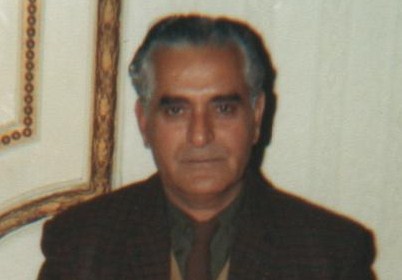

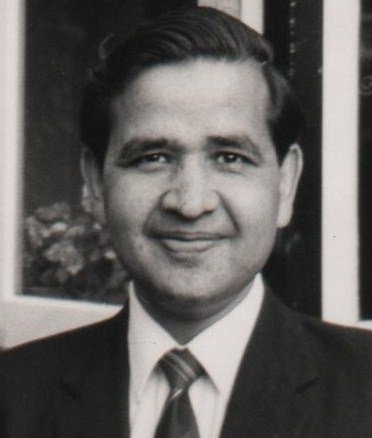
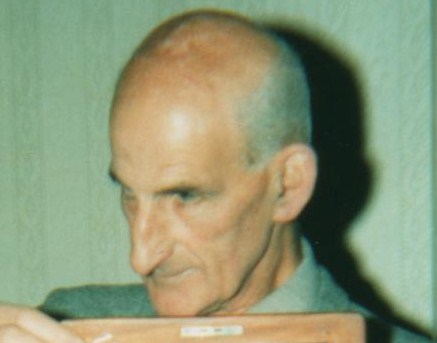

.jpg)
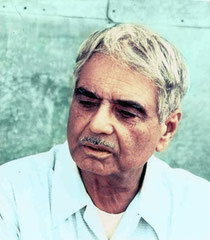

.jpg)
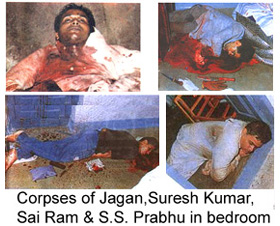
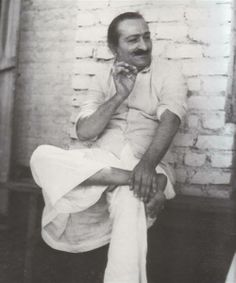
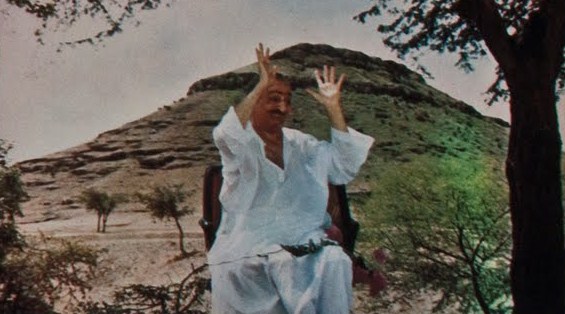
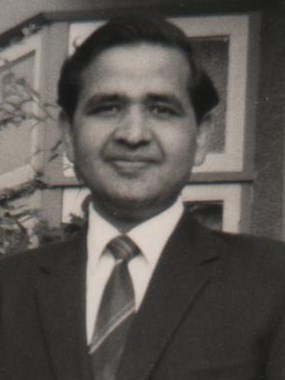
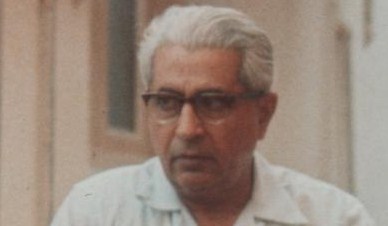

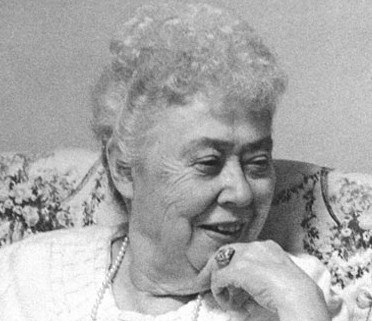
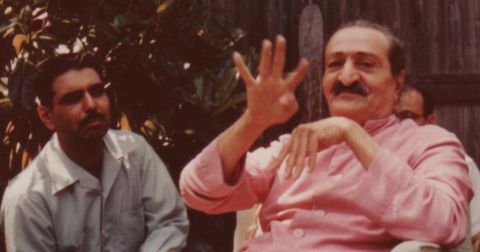
.jpg)
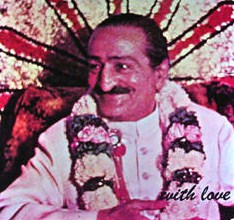
.jpg)
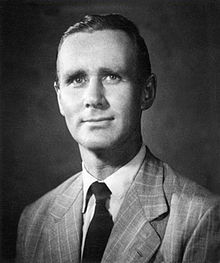

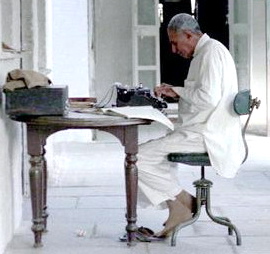
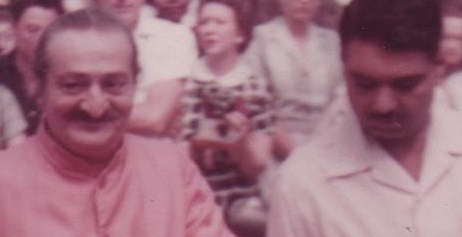
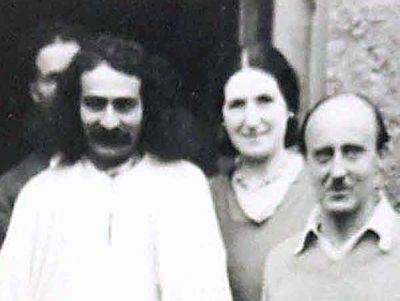

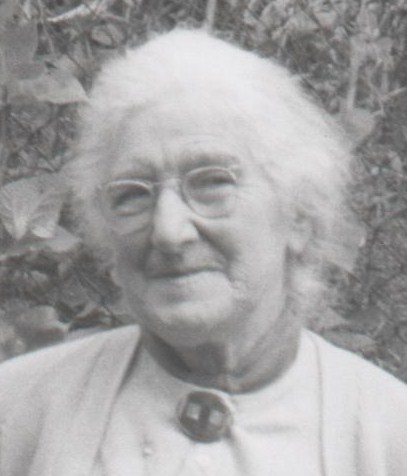
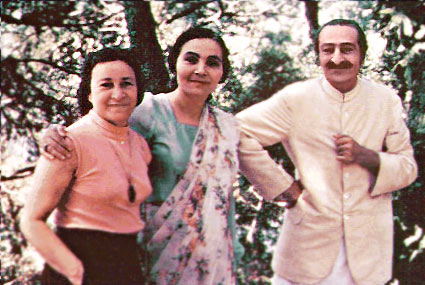
.jpg)

.jpg)

.jpg)


.jpg)